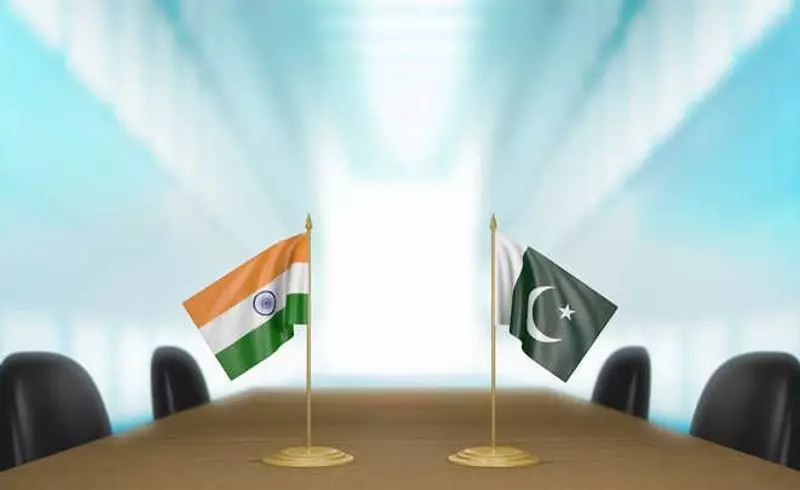
In a significant diplomatic development, Pakistan has publicly endorsed China's assertion that it played a constructive role in de-escalating military tensions between India and Pakistan during a recent border incident referred to as 'Operation Sindoor'. This backing adds a new layer to the complex geopolitical dynamics in the region.
Pakistan's Official Endorsement of China's Claim
The Pakistani Foreign Ministry, through its spokesperson Mumtaz Zahra Baloch, confirmed its support for China's stated position. During a weekly press briefing in Islamabad, Baloch was questioned about Beijing's claims of having mediated to calm the situation. She responded by stating that Pakistan appreciates China's consistent and constructive role in promoting peace and stability in the region.
This official statement directly aligns Islamabad with Beijing's narrative. The spokesperson emphasized that China is a trusted friend and partner of Pakistan, and its efforts for regional peace are well-recognized. This public endorsement is seen as a move to strengthen the strategic partnership between the two nations, often described as having an 'all-weather friendship'.

The Context: 'Operation Sindoor' and Chinese Mediation Claims
The incident at the center of these claims, known in Indian media circles as 'Operation Sindoor', reportedly involved a military stand-off along the Line of Control (LoC) or the international border. While specific operational details from October-November 2023 remain classified, the event was serious enough to prompt high-level diplomatic activity.
The controversy arose when a Chinese foreign ministry spokesperson, Mao Ning, claimed in a press conference that China had played a 'positive and constructive role' in easing tensions between the two nuclear-armed neighbors following this operation. This assertion by Beijing was notable as it positioned China, a close ally of Pakistan, as a neutral mediator in a bilateral dispute between India and Pakistan.
India has consistently maintained that issues with Pakistan are strictly bilateral and has rejected any third-party mediation, including from China or the United Nations. The Indian government's official response to China's claim was one of dismissal. An official source in New Delhi stated that no such mediation was sought or took place, firmly reiterating India's long-standing position that all matters with Pakistan should be resolved directly between the two countries.
Regional Implications and Diplomatic Standoff
This episode highlights the ongoing diplomatic friction in South Asia. Pakistan's backing of China's claim serves multiple purposes. It reinforces the China-Pakistan alliance, potentially grants Beijing greater diplomatic credibility as a regional peacemaker, and indirectly challenges India's stance on bilateralism.
For India, the combined statements from Beijing and Islamabad represent an unwelcome narrative. New Delhi views any suggestion of external mediation as an infringement on its sovereignty and a dilution of the Shimla Agreement and Lahore Declaration, which enshrine the principle of bilateral dispute resolution.
The differing accounts create a clear diplomatic standoff. On one side, China and Pakistan present a story of successful crisis diplomacy involving a major power. On the other, India flatly denies the entire premise, asserting that the situation was managed through existing military and diplomatic channels between the two direct parties.
The timing and nature of 'Operation Sindoor' remain officially undisclosed by Indian authorities, adding an element of opacity to the factual basis of the competing claims. This lack of public detail makes it challenging to independently assess the exact sequence of events that prompted the Chinese and now Pakistani statements.
Analysts suggest that such public endorsements are part of broader strategic messaging. For China, it is an effort to project itself as a responsible global power capable of managing regional conflicts. For Pakistan, aligning with this narrative strengthens ties with its most powerful ally while diplomatically engaging on an issue central to its national security.

The incident underscores the fragile state of India-Pakistan relations and the ever-present potential for escalation. It also illustrates how third parties, particularly China, seek to influence and narrate events in the region, often leading to conflicting versions of reality that serve broader geopolitical interests.