

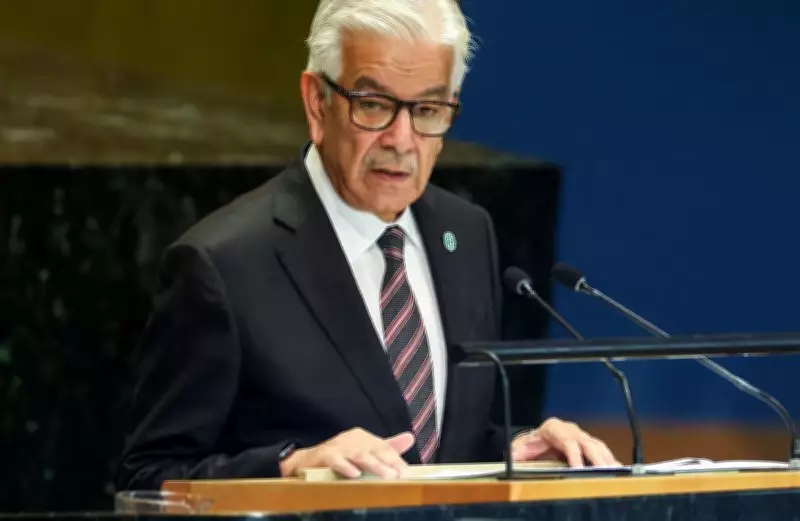
Pakistan's Defence Minister Confesses to Past Errors in National Assembly Address
In a candid and unprecedented admission before the National Assembly, Pakistan's Defence Minister Khawaja Asif openly acknowledged that the United States had historically exploited Pakistan 'like toilet paper' during various geopolitical engagements. This stark confession marks a significant moment of introspection for the nation's political leadership, highlighting a critical reassessment of past foreign policy decisions.
A Frank Admission of Exploitation and Strategic Missteps
During his address, Minister Asif did not mince words, describing how Pakistan was repeatedly used as a disposable tool by the United States in regional conflicts and strategic maneuvers. He emphasized that this pattern of exploitation has led to severe consequences for Pakistan's sovereignty and international standing, urging lawmakers and the public to recognize these historical blunders.
The defence minister pointed out specific instances where Pakistan's interests were sidelined in favor of American agendas, particularly in the context of the war on terror and other military collaborations. He stressed that such alliances often resulted in Pakistan bearing the brunt of economic and security fallout, while the US reaped the benefits and moved on.

Call for a Sovereign and Independent Foreign Policy
Building on his critique, Asif called for a decisive shift in Pakistan's foreign policy approach. He advocated for a more autonomous and self-reliant stance, free from over-dependence on any single global power. This plea for independence resonates with growing domestic sentiments favoring national sovereignty and strategic self-determination.
The minister outlined key areas where Pakistan must assert its own interests, including:
- Enhancing diplomatic ties with neighboring countries and regional blocs.
- Diversifying economic and military partnerships to reduce vulnerability.
- Prioritizing domestic stability and development over external alignments.
Political and Public Reactions to the Startling Confession
Asif's remarks have sparked widespread discussion across Pakistan's political spectrum and among the general public. Many view his honesty as a long-overdue acknowledgment of flawed policies, while others see it as a strategic move to reshape the nation's geopolitical narrative. The admission is expected to influence ongoing debates about Pakistan's role in global affairs and its future diplomatic directions.
This development underscores a broader trend of nations reevaluating their historical alliances in an increasingly multipolar world. For Pakistan, it represents a potential turning point toward crafting a foreign policy that truly serves its national interests, rather than being manipulated by external powers. The defence minister's call to learn from past mistakes and forge a path of independence could have lasting implications for regional stability and international relations.






