Congress MP Priyanka Gandhi Urges PM Modi to Highlight Gaza Crisis During Israel Visit
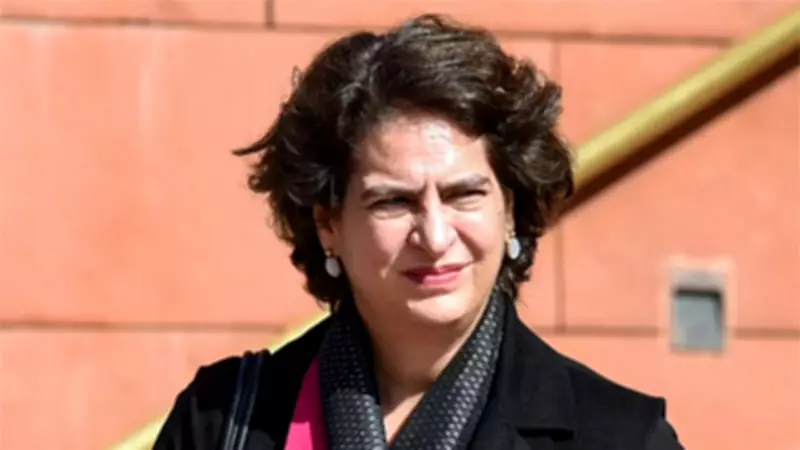
Congress MP Priyanka Gandhi Vadra has publicly called upon Prime Minister Narendra Modi to address the ongoing humanitarian crisis in Gaza during his upcoming state visit to Israel. In a significant intervention on Wednesday, she urged the Prime Minister to speak about the plight of civilians while delivering his scheduled address to the Knesset, Israel's parliament.
Timing of the Appeal Amid High-Profile Diplomatic Mission
Her remarks coincide with PM Modi's departure for a two-day state visit to Israel from February 25 to 26, undertaken at the personal invitation of Israeli Prime Minister Benjamin Netanyahu. The Prime Minister's itinerary includes meetings with Netanyahu, a courtesy call on President Isaac Herzog, and the pivotal address to the Knesset that has now become a focal point of domestic political discourse.
In a detailed post on social media platform X, Priyanka Gandhi wrote: "I hope that the Hon Prime Minister mentions the genocide of thousands of innocent men, women and children in Gaza while addressing the Knesset on his upcoming trip to Israel and demands justice for them. India has stood for what is right throughout our history as an independent nation, we must continue to show the light of truth, peace and justice to the world."

She emphasized India's historical tradition of taking principled positions on international issues, asserting that the nation must persistently uphold the values of truth, peace, and justice on the global stage. This appeal reflects growing domestic scrutiny of India's foreign policy posture regarding the Israel-Palestine conflict.
Congress Party's Broader Criticism of Government's Palestine Stance
The Congress party has amplified its criticism of the government's handling of the Gaza conflict. Party general secretary Jairam Ramesh launched a sharp attack, alleging that the government has effectively abandoned the Palestinian cause despite rhetorical claims to the contrary.
In his own social media post, Ramesh accused PM Modi of displaying "moral cowardice" by embracing Netanyahu while civilian suffering intensifies in Gaza. He provided historical context, noting: "On May 20 1960, Jawaharlal Nehru was in Gaza and met with the Indian contingent of the UN Emergency Force there. On Nov 29 1981, India issued a commemorative postage stamp in solidarity with Palestine. On Nov 18 1988, India formally recognised the state of Palestine. That was a different era."
Ramesh contrasted this historical support with current developments, stating: "Now the Indian Prime Minister is brazenly embracing the Prime Minister of Israel, who has reduced Gaza to rubble and dust and who is orchestrating the expansion of illegal settlements in the occupied West Bank. When the entire world is critical of his 'dear friend' Mr. Netanyahu, Mr. Modi will be displaying moral cowardice."
Government's Perspective on the Strategic Israel Visit
Meanwhile, the government has framed the visit as a crucial opportunity to reaffirm and strengthen the deep, long-standing strategic partnership between India and Israel. According to official statements from the Ministry of External Affairs, the two leaders will comprehensively review progress across multiple domains of cooperation:
- Defence and security collaboration
- Science and technology partnerships
- Innovation ecosystems
- Agricultural advancements
- Water management solutions
- Bilateral trade expansion
- People-to-people exchanges
Key anticipated outcomes include an upgraded security agreement and substantive progress on a proposed free trade agreement that could significantly boost economic ties. PM Modi's schedule also features participation in an innovation-focused event and a solemn visit to Yad Vashem, the World Holocaust Remembrance Center.
Israeli Prime Minister Netanyahu has characterized the visit as "historic", underscoring the rapidly growing defence and economic cooperation between the two nations. The leaders are expected to exchange perspectives on regional and global developments, with particular attention to the volatile situation in West Asia.

This diplomatic mission occurs against a complex backdrop where India must balance its traditional support for Palestinian rights with its increasingly robust strategic partnership with Israel, all while navigating domestic political expectations and international humanitarian concerns.