

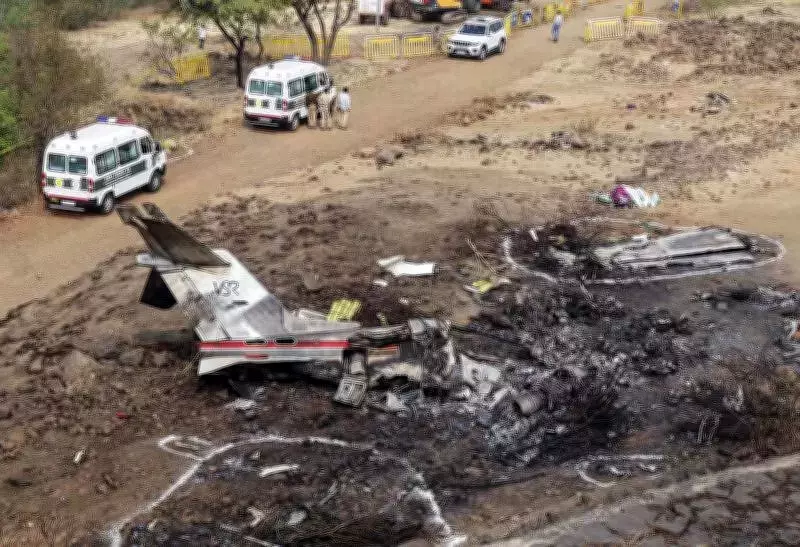
In a significant development in the investigation of the tragic Learjet 45 aircraft crash near Baramati, authorities have successfully recovered the crucial black box. This critical piece of equipment, comprising both the cockpit voice recorder (CVR) and the flight data recorder (FDR), was retrieved on Thursday, just one day after the fatal incident that claimed the lives of Maharashtra's Deputy Chief Minister Ajit Pawar and four other individuals.
Black Box: The Key to Unraveling the Mystery
The recovery of the black box marks a pivotal step forward in the official probe. Civil aviation ministry authorities have confirmed that the investigation is now progressing expeditiously with this vital evidence in hand. The data contained within the CVR and FDR is expected to be instrumental in cracking the riddle behind the devastating plane crash. A source closely associated with the investigation revealed that the process of extracting and analyzing this data could take anywhere from two to four weeks.
What the Data Will Reveal
Once successfully extracted, the information from the black box promises to shed light on the exact cause or causes of the crash. Investigators anticipate it will provide a detailed account of events inside the cockpit, including all discussions between the two pilots and their interactions with Air Traffic Control (ATC). However, a potential complication has been noted. Another source indicated that teams are carefully checking whether the black box equipment or its stored data sustained any damage due to the fire that followed the crash. In such scenarios, where fire damage is a concern, the data extraction process typically requires more time and specialized handling.

Investigation Teams and Site Security
The investigative machinery swung into action swiftly following the crash. A team of three officers from the Aircraft Accident Investigation Bureau in Delhi, along with another three-officer team from the Directorate General of Civil Aviation's (DGCA) Mumbai regional office, reached the crash site on Wednesday itself. They immediately initiated preliminary investigations. To ensure the integrity of the site, Union Civil Aviation Minister Ram Mohan Naidu, who was in Pune on Wednesday, stated that concrete steps were being taken. The local police were instructed to fence off the area, protecting it from any external interference and ensuring that investigating authorities could work without hindrances.
Scrutiny on Pilot Experience and Operational Factors
As the technical analysis of the black box data begins, parallel lines of inquiry are being pursued. Retired Air Marshal Bhushan Gokhale highlighted a specific area of focus for the DGCA. He pointed out that investigators would likely examine whether the two commanders of the ill-fated Learjet had prior experience landing on a tabletop runway like the one at Baramati. Such runways, situated on plateau-like terrain, demand heightened precautions and specific piloting skills. Gokhale noted that the Indian Air Force routinely conducts trial landings on various runway types to build such expertise.
The Context of Increased Charter Flight Operations
The crash has also sparked a broader discussion within the aviation community about the pressures of modern charter operations. Ishwarchandra Gulgule, Managing Director of Kaigu Aviation in Pune, provided context, noting a dramatic surge in charter and helicopter flights. He stated that such operations have increased by more than 100% compared to the previous decade. This boom, while creating more pilot jobs, also brings intense operational pressure.
Gulgule explained that pilots today often have to navigate less familiar terrains, and the flying hours have skyrocketed. On average, jets are now logging over 100 hours of flight time per month, a stark contrast to the range of just three to forty hours per month common a few years ago. This increased workload is a factor that the industry is continually assessing. Furthermore, Gulgule mentioned that many aviation companies now utilize state-of-the-art flight simulators, which are crucial for training pilots for diverse and challenging landing scenarios, including those on tabletop runways.

The nation now awaits the findings from the black box analysis, hoping for answers that can prevent such tragedies in the future and provide closure in the wake of this profound loss.





