

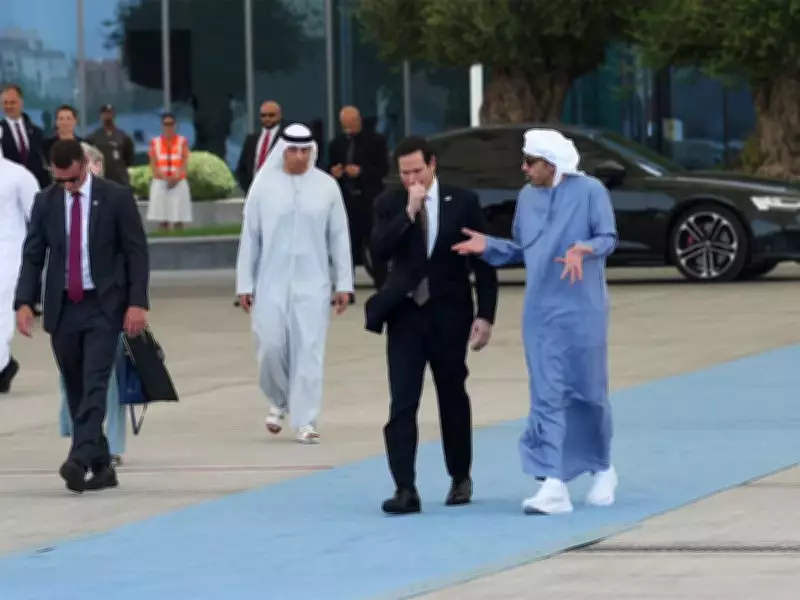
US Secretary of State Marco Rubio expressed gratitude to the United Arab Emirates for its "leadership and unparalleled support" in countering Iranian aggression, during a high-level meeting with UAE President Sheikh Mohamed bin Zayed Al Nahyan in Abu Dhabi on Wednesday. The discussions, part of Rubio's regional tour, focused on bolstering bilateral ties and ensuring regional stability.
Key Discussions and US Commitment
State Department spokesperson Tommy Pigott detailed that the talks centered on President Donald Trump's efforts to secure safe transit through the Strait of Hormuz, emphasizing the critical importance of peace and stability in the region. Rubio "thanked the UAE for their leadership and unparalleled support, praised their courage and resilience in the face of Iran's attacks, and reaffirmed the US commitment to the security of the Emirates," Pigott said.
The meeting also covered the robust US-UAE partnership in defense and commerce, as well as President Trump's broader memorandum of understanding with Iran. This visit underscores Washington's proactive diplomatic outreach to Gulf allies amid a shifting security landscape.

Rubio's Remarks on Iranian Proxies and Lebanon
Upon arrival in Abu Dhabi on Tuesday, Rubio told reporters that lasting peace in West Asia cannot be achieved while Iranian-backed proxy groups continue attacks. "You can't have the end of hostilities and conflict in the region as long as Iranian proxies are launching missiles and drones from Iraq and are participating in terrorism," he stated.
Addressing the Lebanon ceasefire, Rubio stressed that negotiations with Tehran are separate from those with Lebanon. "That process is separate. It's separate because Lebanon is a sovereign country. It has a government. And when it comes to Lebanon and what's happening inside of Lebanon, we're going to negotiate a deal directly with the Lebanese Government," he said, noting recent talks with Lebanese President Joseph Aoun.
Regional Tour and Consultations
Rubio's tour, running from June 23 to June 25, includes stops in Kuwait and Bahrain, following initial technical talks between Iran and the US in Switzerland. Those talks produced a 14-point memorandum of understanding aimed at ending regional hostilities. The trip is designed to consult Gulf Cooperation Council allies as Washington advances its dialogue with Tehran.
"We're really here to hear from them more than we are to talk," Rubio told reporters, highlighting the intent to integrate Gulf partners' perspectives after the Switzerland talks. He noted that regional allies support peace efforts but that operational challenges remain. "All of them are on board for peace. Obviously, it all depends on the details of that peace as we work through," he observed.
Iran's Future Role
On Iran's future, Rubio concluded that Tehran's leadership faces a choice between continuing its militant legacy or adopting a conventional state framework. "If Iran's leadership makes a decision that they want to be a country instead of a revolutionary movement that exports terror, they're going to have an opportunity to do incredible things," he said, reiterating that verifiable progress on curbing proxy activities is essential for any permanent diplomatic breakthrough.






