Sri Lankan Political Delegation Explores India's Cooperative Success in Anand
A significant delegation from Sri Lanka's Janatha Vimukthi Peramuna (JVP), headed by its general secretary Tilvin Silva, conducted an educational visit to Anand on Sunday. The primary objective was to gain in-depth insights into India's renowned cooperative movement and the transformative White Revolution model that has reshaped rural economies.
Studying the Amul Framework
The delegation commenced its tour at the iconic Amul Dairy, where officials provided a comprehensive briefing through a documentary presentation. This detailed overview traced the evolution of Gujarat's cooperative movement from its inception to its current global stature. The presentation meticulously outlined Amul's unique governance structure, innovative marketing strategies, and efficient supply chain management systems.
The discussion emphasized how the cooperative model has been instrumental in driving profound socio-economic change at the grassroots level, particularly among dairy farmers who have seen their livelihoods transformed through collective enterprise.

Firsthand Observations and Institutional Engagement
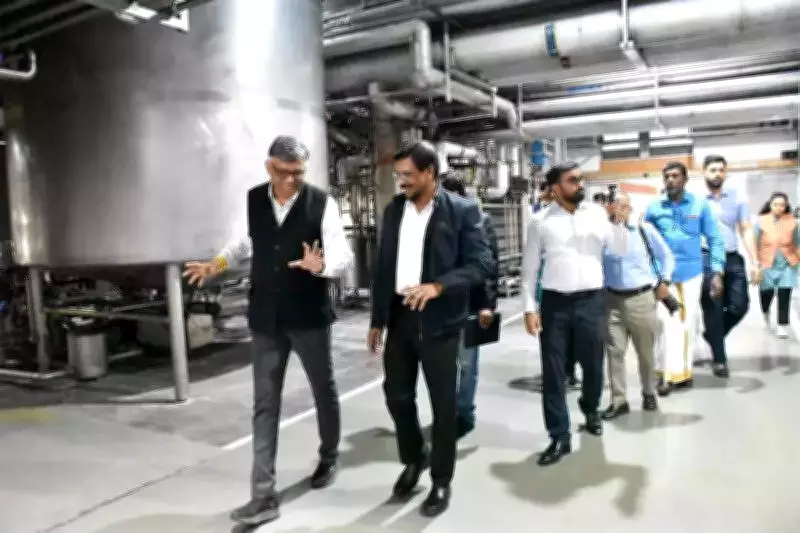
Following the presentation, the Sri Lankan representatives embarked on a guided tour of Amul Dairy's extensive plant facilities. Tilvin Silva documented his impressions in the visitors' book, explicitly describing the Amul model as "an effective framework for community-based economic development" that could offer valuable lessons for Sri Lanka.
The delegation then proceeded to the Institute of Rural Management, Anand (IRMA)–Tribhuvan Sahkari University (TSU) for further academic engagement. Here, discussions delved into:
- IRMA's institutional legacy in rural management education
- The cooperative education curriculum at TSU
- Recent developments and policy reforms within India's cooperative sector
Faculty members shared details of ongoing research initiatives and specialized training programs designed to strengthen cooperative institutions across India. The exchange highlighted potential areas for bilateral cooperation and knowledge sharing between the two nations.