

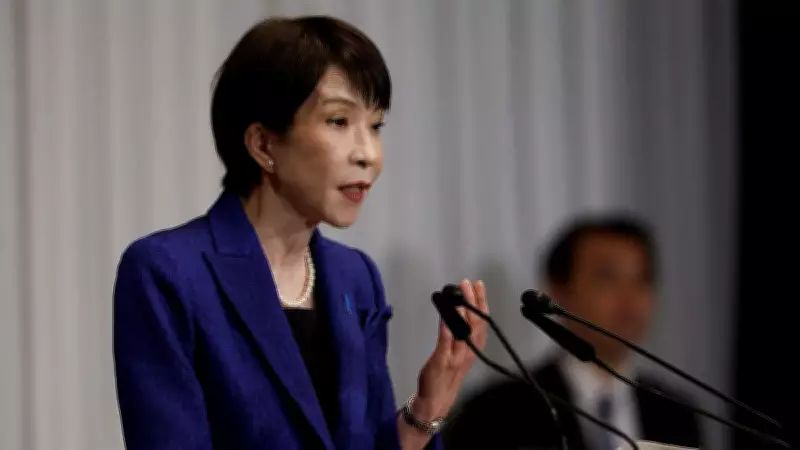
Takaichi's Mandate Fortifies India-Japan Strategic Military Convergence
In a significant geopolitical development, Japan under the leadership of Sanae Takaichi is advancing toward a posture where military capability is being openly acknowledged as central to national policy. This strategic shift is strengthening the convergence between India and Japan, two key players in the Indo-Pacific region.
Japan's Evolving Defense Posture Under Takaichi
Traditionally, Japan has maintained a pacifist stance rooted in its post-World War II constitution. However, recent years have seen a gradual reassessment of this approach, driven by regional security challenges. Under Takaichi's mandate, this evolution is accelerating, with military capability gaining prominence in national policy discussions. This move reflects a broader trend of Japan seeking to bolster its defense capabilities in response to growing threats, particularly from neighboring nations.
The implications of this shift are profound. By openly prioritizing military strength, Japan is signaling a readiness to play a more assertive role in regional security. This aligns with India's own strategic interests, as both nations share concerns over stability in the Indo-Pacific. The convergence is not merely rhetorical; it is backed by increasing defense cooperation, joint exercises, and technology sharing between the two countries.

Strategic Alignment with India
India and Japan have long enjoyed a robust partnership, spanning economic, cultural, and diplomatic spheres. The enhancement of military ties under Takaichi's leadership adds a critical dimension to this relationship. As Japan moves toward a more overt military posture, it finds a natural ally in India, which has been steadily modernizing its armed forces and expanding its strategic footprint.
This alignment is driven by mutual interests:
- Both nations seek to counterbalance the influence of assertive powers in the region.
- They aim to ensure freedom of navigation and uphold international law in maritime domains.
- There is a shared commitment to promoting a rules-based order in the Indo-Pacific.
The strategic convergence is further reinforced by high-level dialogues and agreements, such as the Acquisition and Cross-Servicing Agreement (ACSA), which facilitates logistical support between their militaries. Under Takaichi's guidance, Japan's willingness to embrace military capability as a policy cornerstone is likely to deepen these collaborative efforts.
Broader Regional Implications
The strengthening of India-Japan ties under Takaichi's mandate has significant implications for regional dynamics. As Japan sheds some of its historical constraints on military engagement, it can contribute more substantially to collective security initiatives. This, in turn, enhances the strategic weight of the India-Japan partnership, potentially influencing other nations in the region to reassess their own defense postures.
Looking ahead, the convergence is expected to foster greater interoperability between Indian and Japanese forces, joint development of defense technologies, and coordinated responses to emerging threats. While challenges remain, such as navigating complex diplomatic landscapes, the trajectory under Takaichi points toward a more integrated and resilient partnership.
In conclusion, Sanae Takaichi's leadership is catalyzing a pivotal shift in Japan's national policy, with military capability taking center stage. This evolution not only strengthens Japan's own defense posture but also fortifies its strategic convergence with India, shaping a more secure and stable Indo-Pacific region for the future.






