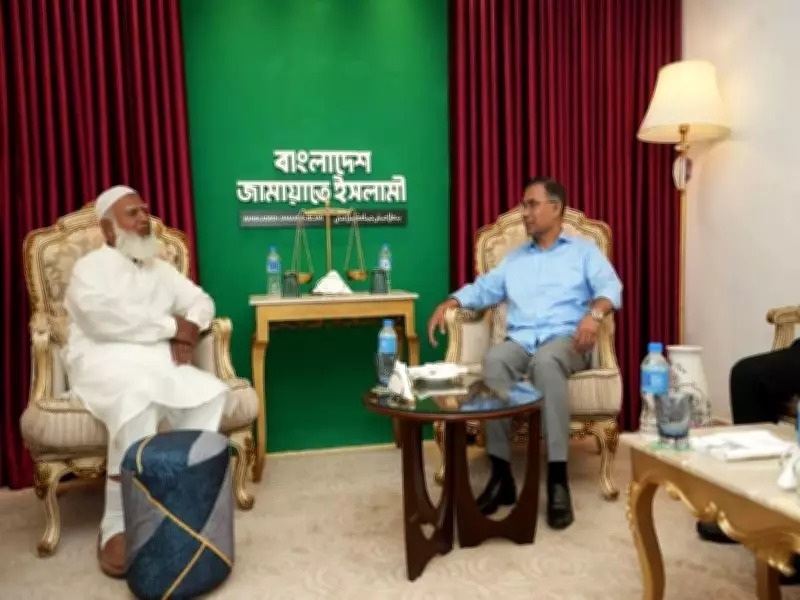
Bangladesh's Tarique Rahman Holds Key Meeting with Jamaat-e-Islami Chief Post-Election
In a significant political development, Tarique Rahman, the acting chairman of the Bangladesh Nationalist Party (BNP), conducted a formal courtesy visit to Shafiqur Rahman, the chief of Jamaat-e-Islami. This high-profile meeting occurred shortly after the BNP secured a resounding landslide victory in the recent national elections, marking a pivotal moment in Bangladesh's political landscape.
Post-Victory Diplomacy and Strategic Outreach
The encounter between these two influential political figures is widely interpreted as a strategic move aimed at fostering stronger alliances and consolidating opposition forces. Tarique Rahman's outreach to the Jamaat-e-Islami leadership underscores the BNP's intent to build a cohesive and robust coalition capable of addressing the nation's pressing challenges and shaping future governance.
This courtesy call is not merely a routine gesture but a calculated step in the complex chessboard of Bangladeshi politics. It highlights the evolving dynamics where traditional rivalries may be set aside in pursuit of broader political objectives and shared interests.

Implications for Bangladesh's Political Future
The meeting carries profound implications for the trajectory of Bangladesh's democracy and governance. Analysts suggest that this interaction could pave the way for:
- Enhanced Opposition Unity: Strengthening collaborative efforts among various political factions to present a unified front.
- Policy Coordination: Aligning on key national issues such as economic reforms, social justice, and diplomatic strategies.
- Electoral Strategies: Formulating joint approaches for upcoming local and national polls to maximize political influence.
Furthermore, this development signals a potential recalibration of political alliances, which could influence legislative processes and public policy debates in the coming months.
Broader Context and Regional Observations
Bangladesh's political environment has been characterized by intense competition and periodic shifts in allegiances. The BNP's decisive electoral win, followed by this diplomatic engagement, reflects a strategic maneuvering to consolidate power and expand its support base. Observers note that such interactions are crucial in a multiparty democracy, where coalition-building often determines governmental stability and policy implementation.
The courtesy visit also underscores the importance of personal diplomacy in South Asian politics, where leader-to-leader engagements can significantly impact party relations and public perception.
As Bangladesh navigates its post-election phase, the outcomes of this meeting will be closely monitored by domestic stakeholders and international observers alike, offering insights into the future direction of the country's political discourse and governance models.