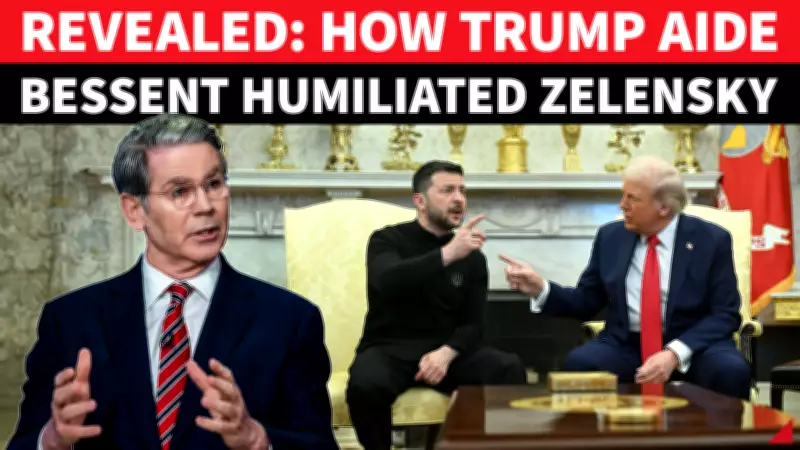
A new book has revealed explosive private comments allegedly made by U.S. Treasury Secretary Scott Bessent about Ukrainian President Volodymyr Zelensky, including using a vulgar insult, ahead of Zelensky's contentious Oval Office meeting with former President Donald Trump last year.
Bessent's Alleged Remarks and the Minerals Deal
According to Regime Change, a forthcoming book by New York Times reporters Maggie Haberman and Jonathan Swan, Bessent expressed deep frustration with Zelensky during negotiations over a U.S.-Ukraine minerals agreement. The book claims Bessent referred to Zelensky as a 'little f****r' and warned Trump administration officials that the Ukrainian leader could disrupt a planned White House signing ceremony.
The book details a reported 45-minute shouting match between Bessent and Zelensky in Kyiv as talks over the minerals deal became increasingly tense. The incident underscores the friction that has characterized U.S.-Ukraine relations under the Trump administration.

Context of the Oval Office Clash
The revelations come amid ongoing scrutiny of Zelensky's February 2025 visit to the White House, which ended in a heated exchange with Trump. The meeting, which was widely covered by international media, highlighted the strained relationship between the two leaders.
Bessent's alleged comments, if true, would represent a significant breach of diplomatic protocol and could further complicate efforts to secure a minerals deal that the U.S. sees as critical for its supply chain security.
Reactions and Implications
The White House has not officially commented on the book's claims. However, the report has already sparked debate in diplomatic circles about the state of U.S.-Ukraine relations. The minerals deal, which would grant the U.S. access to Ukraine's rare earth deposits, is seen as a strategic priority for the Trump administration.
Zelensky's office has not responded to requests for comment. The Ukrainian president has previously denied any personal animosity with U.S. officials, emphasizing the importance of bilateral cooperation.