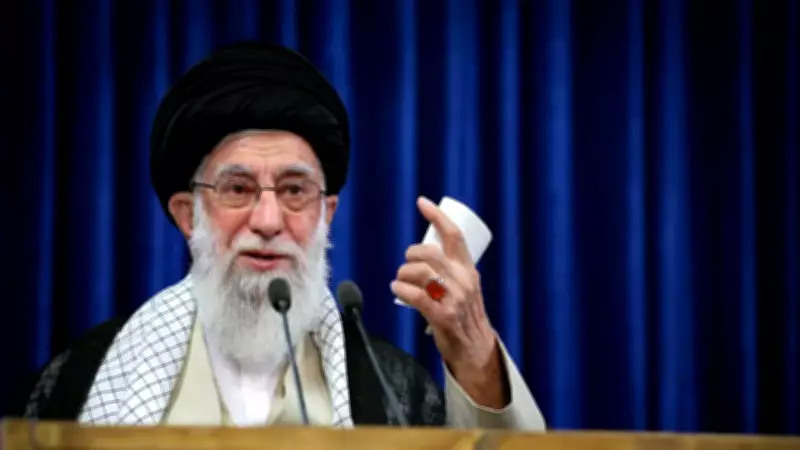
Trump Announces Khamenei's Death, Prompting Iranian Retaliation
In a dramatic escalation of tensions, former US President Donald Trump declared that Iran's Supreme Leader Ayatollah Ali Khamenei had been killed in a joint US-Israel strike on Tehran. Shortly after, Iran launched a series of missile and drone attacks targeting Israel and US military bases across the Gulf region, marking a significant retaliation in the ongoing conflict.
Cryptic Social Media Message and Immediate Fallout
Just minutes after Trump's announcement, a cryptic message was posted on Iran's Supreme Leader's official social media platform X. The message, written in Persian, invoked the name of Haidar—the first Shia Imam and a central figure in Shia Islam—with the text reading: "Be nām-e nāmi-ye Heydar, alayhis-salām," which translates to "In the exalted name of Haidar (peace be upon him)." This post added a layer of religious symbolism to the unfolding crisis.
Trump made his claim in a post on Truth Social, stating: "Khamenei, one of the most evil people in history, is dead." He elaborated that the cleric was tracked using highly sophisticated systems and described the assassination as the greatest opportunity for the Iranian people to reclaim their country. Israeli Prime Minister Benjamin Netanyahu supported this, noting there were many signs indicating the 86-year-old leader was no longer alive.

Iran's Response and Military Actions
Iran has not formally confirmed Khamenei's death. However, senior official Ali Larijani issued a stern warning, asserting that the United States and Israel would regret their actions and promising an unforgettable lesson from Iran's armed forces. True to this threat, within hours, missiles and drones were launched. Strikes began around 09:30 Tehran time, with explosions reported near Khamenei's heavily guarded Leadership House compound in Tehran.
Satellite imagery later revealed blackened buildings and debris within a kilometer of the site. Israeli officials confirmed the compound had been destroyed in what they termed a powerful surprise strike. Additionally, reports indicated attacks on US navy headquarters in Bahrain and explosions heard in Abu Dhabi and Doha, further widening the conflict's geographic scope.
Historical Context and Political Implications
Ayatollah Ali Khamenei had ruled Iran since 1989, succeeding Ayatollah Ruhollah Khomeini. Over nearly four decades, he consolidated power over the clerical establishment, judiciary, and armed forces, creating a robust political system. With his alleged death, there is no publicly confirmed successor. Constitutionally, a panel of clerics is tasked with selecting the next supreme leader, but analysts warn that in wartime, power could shift to a temporary council or the Islamic Revolutionary Guard Corps (IRGC).
The current tensions are at a boiling point, and even minor factional splits could destabilize the political framework that Khamenei spent decades fortifying. This situation poses significant risks for regional stability and international relations, as the conflict shows no signs of abating.