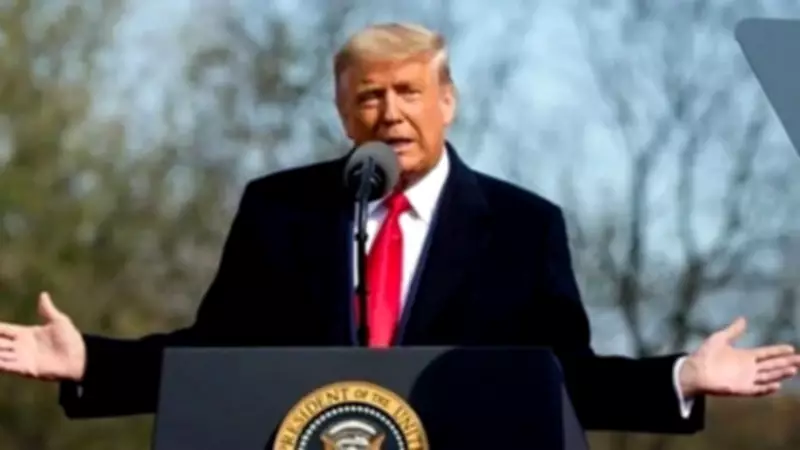
U.S. President Donald Trump confirmed on Thursday that the United States and Iran are currently engaged in talks, but indicated that Tehran is not yet ready to reach a deal. Speaking to reporters at the White House, Trump stated, "We are talking to them. I think they're being serious. I think ... they are being by far the most serious that we've seen them, but that doesn't mean we get there. We'll see what happens." The remarks come amid heightened tensions over Iran's nuclear program and ongoing economic sanctions.
Background of US-Iran Negotiations
The relationship between the United States and Iran has been fraught with mistrust for decades. The Trump administration has pursued a policy of maximum pressure, including severe economic sanctions aimed at curbing Tehran's nuclear ambitions. However, recent months have seen a shift towards diplomatic engagement. In April 2026, indirect talks reportedly took place via Oman, though neither side confirmed progress. Trump's latest comments suggest a renewed willingness to negotiate, though Iran's position remains cautious.
Iranian officials have not officially responded to Trump's statement. However, sources close to the Iranian government indicate that Tehran is demanding a complete lifting of sanctions before any agreement can be finalized. The Islamic Republic has also insisted that the United States return to the 2015 Joint Comprehensive Plan of Action (JCPOA), from which Trump withdrew in 2018. The JCPOA, also known as the Iran nuclear deal, was intended to limit Iran's uranium enrichment in exchange for sanctions relief.

Implications of a Potential Deal
A successful agreement could have far-reaching consequences for regional stability in the Middle East. Iran's nuclear program has been a major concern for Israel and Gulf Arab states. The United Nations' International Atomic Energy Agency (IAEA) has continued to monitor Iran's facilities, but reports of increased enrichment levels have raised alarms. Trump's optimism about Iran's seriousness may signal a potential breakthrough, though he tempered expectations by acknowledging that a deal is not guaranteed.
Economic factors also play a role. Iran's economy has been crippled by sanctions, with inflation high and unemployment widespread. The Iranian leadership may be motivated to negotiate to alleviate economic pressure. However, hardliners within Iran's political structure oppose any compromise, viewing the United States as untrustworthy. The internal dynamics in Tehran will likely determine the outcome of the talks.
International reactions have been mixed. European allies, including France, Germany, and the United Kingdom, have welcomed the news of dialogue and urged both sides to reach a comprehensive agreement. Russia and China, meanwhile, have called for the lifting of sanctions and the restoration of the JCPOA framework.
Details of the Talks
The exact nature of the talks remains unclear. Trump did not specify whether discussions are direct or through intermediaries. According to a Reuters source, the talks have been ongoing for several weeks, focusing initially on humanitarian issues before moving to nuclear concerns. However, Iran's Supreme Leader Ayatollah Ali Khamenei has previously banned direct negotiations with the United States, so any talks are likely indirect. The White House has declined to provide further details, citing the sensitivity of the process.
This development is significant as it represents the first public confirmation of talks since Trump began his second term in 2025. The president's foreign policy emphasizes personal diplomacy and deal-making, similar to his approach with North Korea. However, unlike North Korea, Iran has a more complex set of demands involving multiple regional actors. Analysts suggest that any agreement would require significant concessions from both sides.

Historical Context
US-Iran tensions have escalated since the US withdrawal from the JCPOA in 2018. In response, Iran gradually reduced its compliance with the deal, enriching uranium to higher levels and exceeding limits on stockpiles. The Biden administration, in office from 2021 to 2025, attempted to revive the JCPOA through negotiations in Vienna, but talks stalled over issues such as sanctions relief and Iran's ballistic missile program. Trump's return to office brought a shift back to maximum pressure, but also a willingness to negotiate from a position of strength.
Trump's latest statement suggests that a new diplomatic channel may have opened. The Iranian foreign ministry has not commented officially, but state media has downplayed the significance of the talks. Meanwhile, Israel's government has expressed skepticism, warning against a deal that would leave Iran with nuclear capabilities. The IAEA has reported that Iran's enriched uranium stockpile is now many times the limit allowed under the JCPOA.
What Comes Next
The path to a deal remains uncertain. Trump's characterization of Iran as "the most serious" they have seen offers a glimmer of hope, but he also cautioned that "we'll see what happens." The next few weeks could be critical as diplomats continue to meet. The world watches to see whether this diplomatic opening will lead to a lasting resolution or another stalemate. For now, both sides appear to be testing the waters, with the outcome hinging on political will in both Washington and Tehran.