

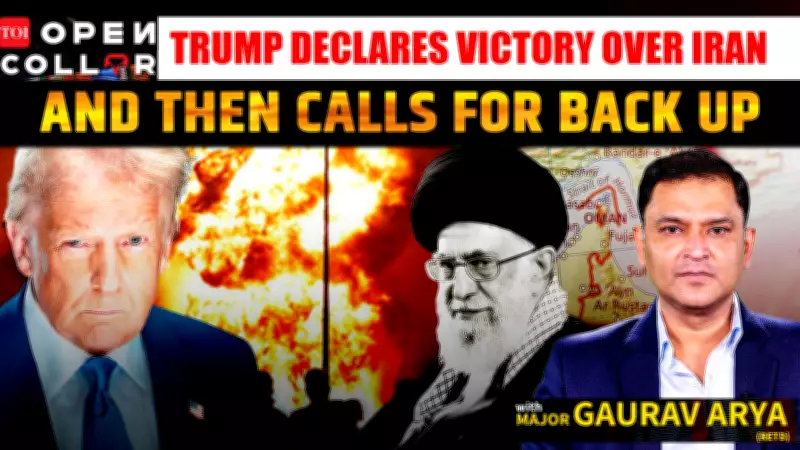
Trump's Contradictory Iran Stance Ignites Global Geopolitical Crisis
In a stunning development that has sent shockwaves through international diplomatic circles, former U.S. President Donald Trump has simultaneously declared victory over Iran while urgently requesting global military assistance. This contradictory position has created what analysts are calling one of the most volatile geopolitical situations in recent memory, with potentially devastating consequences for global energy markets and international stability.
The Strait of Hormuz: World's Most Critical Energy Chokepoint
The epicenter of this escalating crisis is the strategically vital Strait of Hormuz, a narrow maritime passage that serves as the primary conduit for approximately 20% of the world's total energy supply. This waterway, barely 21 nautical miles wide at its narrowest point, represents the single most important artery for global oil transportation, with millions of barrels passing through daily from Middle Eastern producers to energy-hungry markets worldwide.
Major Gaurav Arya's analysis on OPEN COLLAR reveals the profound implications of this developing situation. The geopolitical tension surrounding this critical chokepoint has reached unprecedented levels, creating what military strategists describe as a powder keg scenario that could explode into broader regional conflict at any moment.

Contradiction Between Rhetoric and Reality
The most perplexing aspect of this crisis is the glaring contradiction between Trump's public declarations and the actual situation on the ground. While the former president has publicly proclaimed victory over Iran, behind closed doors, his administration has been frantically seeking international military support from allied nations.
This disconnect raises fundamental questions about the true nature of the situation:
- Is this a calculated geopolitical maneuver designed to pressure Iran through psychological warfare?
- Does it represent a significant strategic miscalculation that has left the U.S. position weaker than publicly acknowledged?
- What intelligence assessments prompted this contradictory approach to international relations?
Iran's Strategic Gambit and Global Response
Iran has responded to this pressure with what appears to be a carefully calibrated strategy to assert control over global oil routes. The nation's positioning in the Strait of Hormuz gives it unprecedented leverage over international energy markets, allowing Tehran to potentially disrupt global supply chains with minimal military investment.
Despite growing international pressure and Trump's urgent requests, major global powers have notably refused to deploy warships to the region. This reluctance stems from several critical factors:
- Concerns about escalating a regional conflict into a broader international confrontation
- Economic considerations regarding the stability of global oil markets
- Strategic calculations about the long-term implications of military intervention
- Diplomatic efforts to maintain relationships with multiple Middle Eastern powers
Global Economic Implications and India's Vulnerability
The escalating crisis has placed global oil prices on a knife's edge, with analysts predicting potential surges that could cripple economies worldwide. Energy-dependent nations, particularly India, face significant vulnerability in this scenario. As one of the world's largest energy importers, India's economic stability is directly tied to the free flow of oil through the Strait of Hormuz.
The situation represents a perfect storm of geopolitical tension, economic vulnerability, and strategic miscalculation. With global economies already on edge from previous disruptions, this latest crisis threatens to push international markets into uncharted territory, potentially triggering widespread economic consequences that could last for years.

Broader Geopolitical Context and Future Implications
This unfolding crisis must be understood within the broader context of Middle Eastern geopolitics, where multiple powers including Saudi Arabia, Israel, and regional actors are carefully positioning themselves. The situation at the Strait of Hormuz represents just one facet of a complex web of alliances, rivalries, and strategic calculations that define the region's political landscape.
As the situation continues to develop, several critical questions remain unanswered:
- Will Trump's contradictory approach achieve its intended objectives or backfire spectacularly?
- How will Iran respond to this pressure, and what escalation scenarios might develop?
- What role will other global powers play in mediating or exacerbating the crisis?
- How will energy markets adapt to this new reality of heightened geopolitical risk?
The full analysis available on OPEN COLLAR provides deeper insights into this complex geopolitical puzzle, examining the strategic calculations, historical context, and potential outcomes of what may become one of the defining international crises of our time.





