

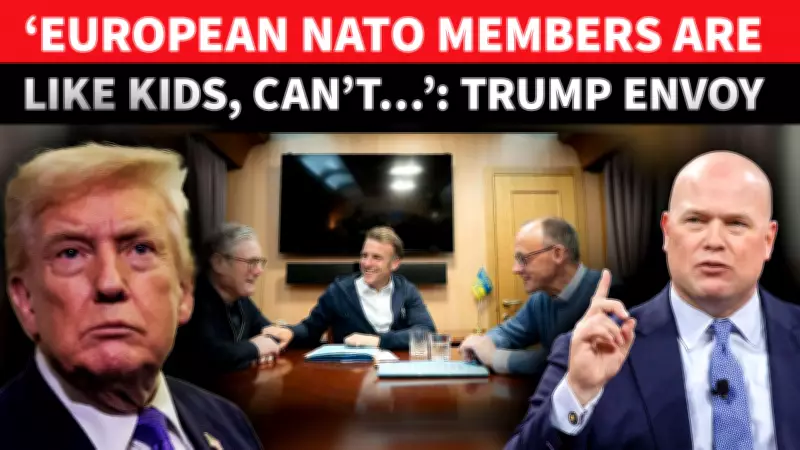
Trump's NATO Envoy Sparks Alliance Panic With 'Time To Grow Up' Warning To Europe
A blunt and provocative message from Washington has sent shockwaves through the NATO alliance, creating a climate of uncertainty and concern among European member states. Speaking during a high-profile visit to Europe, a top U.S. envoy delivered a stark warning that has fundamentally altered the diplomatic landscape.
A Message of Strategic Realignment
The envoy's remarks were characterized by their unvarnished directness, comparing American allies in Europe to "dependent children" who have relied too heavily on U.S. military protection. This language represents a significant departure from traditional diplomatic discourse within the alliance and signals what appears to be a deliberate policy shift from Washington.
The era of automatic American protection for European nations is coming to an end, the envoy declared, emphasizing that European countries must now take greater responsibility for their own defense and security. This message arrives at a critical juncture in international relations, as Washington signals its intention to reorient strategic priorities away from Europe and toward what it perceives as more pressing threats.

The Broader Strategic Context
This diplomatic development occurs against a backdrop of significant geopolitical realignment. The United States is increasingly focusing its military and strategic resources on two primary objectives:
- Strengthening homeland defense capabilities
- Countering the growing influence and military expansion of China in the Asia-Pacific region
This reorientation has immediate practical implications for NATO's operational structure. There are indications that key command roles within the alliance may soon change hands, with European nations expected to assume greater leadership responsibilities. Additionally, military expectations are rising for European members to increase their defense spending and capabilities.
Europe's Uncomfortable Reality Check
The envoy's remarks have forced European leaders to confront an uncomfortable but fundamental question: Can Europe defend itself effectively without American leadership at the forefront? This question strikes at the very heart of the transatlantic security relationship that has defined European defense policy since the Cold War.
As tensions rise within the alliance, fears are growing that the transatlantic bond may be entering a new and uncertain phase. The traditional security guarantees that have underpinned European stability for decades now appear to be undergoing reevaluation and potential renegotiation.
The Implications for NATO's Future
The envoy's message represents more than just diplomatic rhetoric—it signals potential structural changes to how NATO operates. European nations now face increased pressure to:
- Substantially increase defense budgets and military capabilities
- Assume greater leadership roles within NATO command structures
- Develop more robust independent defense coordination mechanisms
- Prepare for a security environment where U.S. involvement may be less automatic
This development comes at a time of heightened global tensions, with multiple conflict zones and strategic competitions demanding international attention. The question of how European nations will respond to this challenge—whether through increased cooperation, enhanced capabilities, or diplomatic pushback—will shape the future of transatlantic relations for years to come.
The alliance now stands at a crossroads, facing what may be its most significant test of unity and purpose in decades. How European capitals respond to this blunt American message will determine whether NATO emerges strengthened or fundamentally transformed by this moment of strategic reckoning.






