

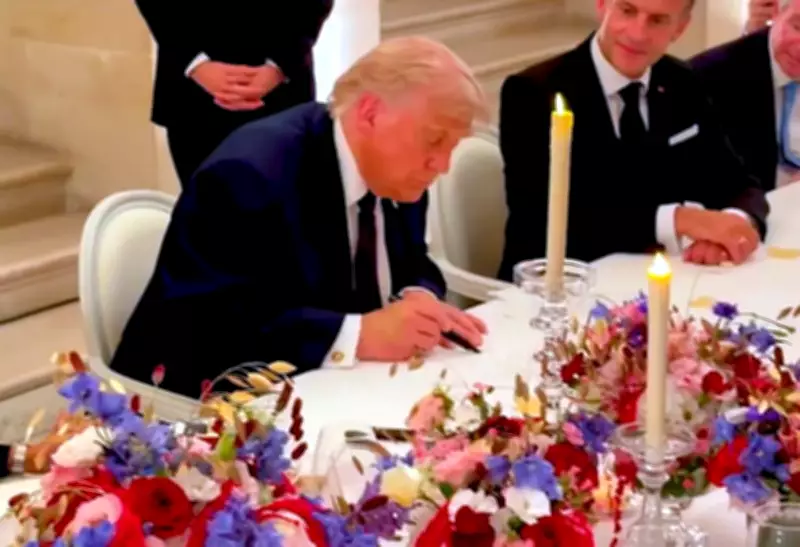
There is delicious irony in the fact that President Trump signed the Memorandum of Understanding (MoU) with Iran at Versailles on June 17. The terms of Trump's surrender at Versailles are a far cry from the conditions that he had unilaterally set for the Iranians. Like the original Treaty of Versailles in June 1919, this one will have a profound psychological impact — not just on the US but also on Israel, on the Gulf states and, indeed, on Iran itself.
For now, the MoU brings the illegal and pointless war launched by the US and Israel on Iran on February 28 to a temporary halt despite at least one major flaw. Iran's insistence on bringing Lebanon into the framework has gifted Israel a veto on the process and there is every indication that unless the Trump administration intercedes decisively, Israel will continue to play the spoiler.
Nevertheless, the framework agreement does give an ephemeral opportunity to all parties to introspect and possibly reimagine a different future for West Asia.

US Military Limitations Exposed
For the US, the experience of the last four months has exposed the limitations of military power. Its inability to impose its will on a smaller and ostensibly weaker state could become a turning point in its foreign policy if it reads the right lessons.
One of those lessons is that unqualified US support to Israel not only ends up making Israel a destabilising force in West Asia but also pulls the US into unwanted conflicts. Israel's actions in Gaza and Lebanon since October 7, 2023 and the violence being unleashed by illegal Jewish settlers on Palestinians in the Occupied West Bank on a daily basis have turned a majority of Americans against Israel. A policy shift that links support to Israel with restraints on its behaviour and progress on the Palestine issue would enjoy domestic popularity and may actually incentivise Israel to explore models of peaceful coexistence with its neighbours.
Trump can also turn his attention to the somnolent Board of Peace that was set up with such fanfare to administer the ceasefire in Gaza. A majority of its two million residents continue to live in tents amidst the rubble left by Israel's bombing even as Hamas regains some of its lost authority.
Israel's Moment of Reckoning
In Israel itself, most commentators have called the MoU an unmitigated disaster. Some supporters of Prime Minister Netanyahu have rapidly swivelled from undiluted adulation of Trump to outright denunciation. Having built his career around a security-first, take-no-prisoners doctrine aimed at preventing a Palestinian state and projecting Iran as an existential threat, Netanyahu may no longer be capable of moderating his own positions. But national elections in October provide some of the other candidates the opportunity to present a different national security paradigm.
Would an Israeli leader have the courage to admit that policies pursued over the last few years have ignited antisemitism around the world and made Israel less secure, to say that Israel does not have to be in a stage of permanent war, that it can try building trust with its neighbours and with the Palestinians? Would there be a willingness to acknowledge that Israel cannot effect regime change in Iran, that it can neither disarm nor destroy ideologically motivated groups like Hezbollah and Hamas, and that its occupation of their land provides the essential fuel for their extremism?
Remember, it was Israel's invasion of Lebanon in 1982 targeting the PLO that gave rise to Hezbollah. And it was Israel's divide-and-rule policy that deliberately strengthened Hamas as a counterweight to the Palestinian Authority. Can a new leader return to the framework established by the Oslo accords and recognise that even with a flawed Palestinian leadership, the pathway to durable peace in the region still runs through Ramallah?
Iran's Strategic Victory and Soul-Searching
Iran might be smug in the victory that it has achieved through a combination of shrewd strategy and a willingness to stand up to the combined military might of the US and Israel. Trump's need to extricate himself from the fiasco has enabled Tehran to extract important concessions that will help revive its struggling economy.

But as the more substantive discussions get underway, Iran too must do some soul-searching about its own policy choices. After almost five decades in power, can it stop acting like a revolutionary regime and start behaving more like a normal state? That means easing up on the repression of its own people, abandoning futile slogans like Death to America and Death to Israel, acknowledging Israel's right to exist alongside a Palestinian state and stopping interference in neighbouring Arab states by leveraging their Shia communities.
Equally important, having shown that it can control the Strait of Hormuz, can Tehran now act in good faith and restore free passage in the strait, as required under international law? By resisting the temptation to impose fees on commercial traffic, it could take an important first step towards rebuilding trust with the Gulf states, like the UAE that faced the brunt of its aggression.
Saudi Arabia and the Arab Peace Initiative
Saudi Arabia, meanwhile, could signal its willingness to revive its dormant Arab Peace Initiative. The plan was first moved through the League of Arab States in 2002 and offered full normalisation of ties between Israel and the Arab states in return for Israeli withdrawal from territories occupied in 1967, the creation of a Palestinian state with East Jerusalem as its capital, and a just solution for Palestinian refugees. An invitation to Iran to join the initiative could dramatically alter the geopolitical landscape of West Asia.
There are, of course, a million caveats. Irrational optimism of this nature can always be dismissed as wishful thinking, an exercise in self-delusion that ignores the brutal facts of Israel's expanding occupation and Iran's unrelenting hostility. But the latest conflict has left the region in flux. Each of the principal actors is being forced to review its traditional assumptions around peace and security. The opportunity for a reset lies in the churn, and few options would be worse than a continuation of the status quo.





