

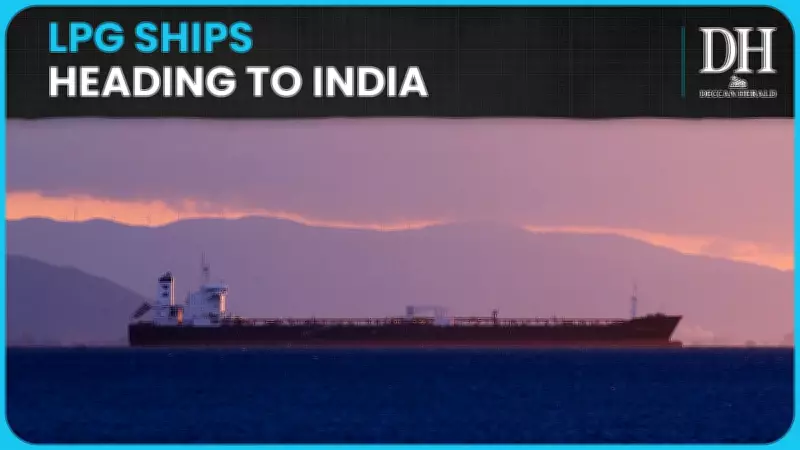
Two Additional Indian LPG Tankers Safely Cross the Strait of Hormuz
In a significant development for India's energy security and maritime operations, two more Indian-flagged liquefied petroleum gas (LPG) carriers have successfully navigated the Strait of Hormuz. This strategic waterway, located between the Persian Gulf and the Gulf of Oman, is a vital global oil chokepoint, handling approximately one-fifth of the world's petroleum trade. The safe passage of these vessels comes amid heightened regional tensions and ongoing security concerns in the Middle East, underscoring the critical importance of secure maritime routes for India's energy imports.
Navigating a High-Risk Maritime Corridor
The Strait of Hormuz is renowned as one of the most strategically significant and potentially volatile maritime passages globally. It serves as the primary conduit for oil exports from major producers like Saudi Arabia, Iran, the United Arab Emirates, and Kuwait. For India, which relies heavily on imported energy to fuel its growing economy, the safe transit of ships through this corridor is paramount. The recent successful crossing by these two LPG tankers highlights the ongoing efforts to maintain the flow of essential energy supplies despite the complex geopolitical landscape.
India's dependence on imported LPG has been steadily increasing, driven by domestic demand and government initiatives like the Pradhan Mantri Ujjwala Yojana, which aims to provide clean cooking fuel to millions of households. As such, the secure passage of these carriers is not just a matter of commercial interest but also of national welfare, ensuring that households across the country have uninterrupted access to LPG.

Regional Tensions and Maritime Security Challenges
The Middle East has been a hotspot of geopolitical tensions, with incidents such as attacks on oil tankers and diplomatic standoffs periodically threatening the stability of key shipping lanes. The Strait of Hormuz, in particular, has witnessed several security incidents in recent years, including seizures of vessels and alleged sabotage attacks. These events have prompted nations, including India, to enhance their maritime surveillance and coordination with international partners to safeguard their commercial interests.
India has been actively engaging in diplomatic and security measures to protect its maritime assets, collaborating with regional players and global powers to ensure the safety of its ships. The Indian Navy has also increased its presence in the area, conducting patrols and exercises to deter potential threats. The successful transit of these two LPG ships reflects the effectiveness of these combined efforts, demonstrating a resilient approach to navigating high-risk environments.
Implications for India's Energy Strategy and Global Trade
The safe passage of these Indian LPG carriers through the Strait of Hormuz has broader implications for India's energy strategy and its role in global trade. Key points include:
- Energy Security: Ensuring the uninterrupted flow of LPG and other petroleum products is crucial for India's energy security, supporting both industrial and domestic needs.
- Economic Stability: Any disruption in this vital shipping lane could lead to price volatility and supply shortages, impacting India's economy and inflation rates.
- Diplomatic Relations: India's ability to navigate these tensions successfully strengthens its diplomatic standing, showcasing its capability to manage complex international scenarios.
- Global Supply Chains: As a major importer, India's experiences in the Strait of Hormuz contribute to global discussions on maritime security and the stability of international trade routes.
Looking ahead, India is likely to continue prioritizing the security of its maritime interests in the region. This may involve further investments in naval capabilities, enhanced intelligence-sharing mechanisms, and proactive diplomatic engagements. The recent transit of these two LPG ships serves as a positive indicator of India's preparedness and resilience in the face of regional challenges, reinforcing its commitment to safeguarding its energy supplies and contributing to global maritime stability.






