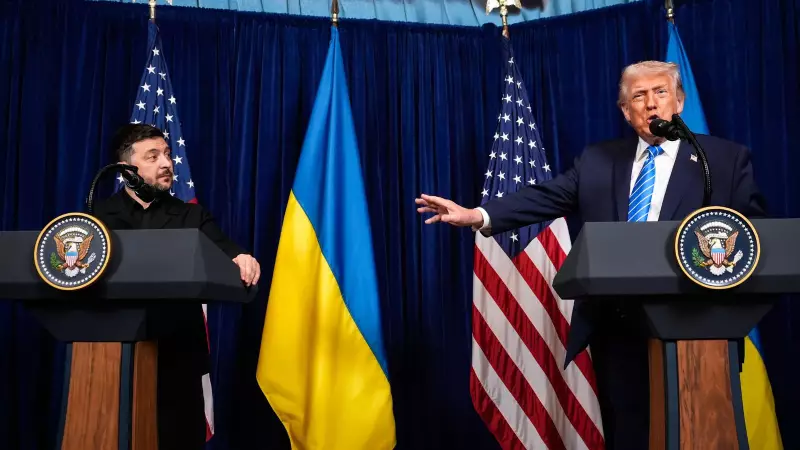
In a significant diplomatic engagement, former US President Donald Trump and Ukrainian President Volodymyr Zelenskyy held talks focusing on a comprehensive 20-point peace plan to end the ongoing war with Russia. The discussions, which took place recently, yielded agreements on several critical points while leaving a substantial agenda unresolved for future negotiation.
The Core of the 20-Point Peace Agenda
The proposed peace framework, championed by Ukraine, outlines a detailed roadmap for conflict resolution. During the conversation with Trump, Zelenskyy sought American support for this multi-faceted plan. The dialogue confirmed mutual understanding on several foundational principles essential for any lasting peace in the region.
Key areas of agreement included a shared commitment to Ukraine's territorial integrity and sovereignty. Both leaders acknowledged the necessity of a just peace that respects international law. Furthermore, there was a consensus on the importance of holding Russia accountable for the damages inflicted during the invasion, aligning with broader global demands for reparations.

Agreed Points and the Unresolved Challenges
While the talks produced alignment on general principles, specific mechanisms for implementation remain a complex challenge. The discussions touched upon crucial issues like security guarantees for Ukraine, a topic of paramount importance for Kyiv's future. The need for a robust, international security arrangement to prevent future aggression was a point of convergence.
However, the agenda also highlighted significant unresolved matters. The most contentious point revolves around the status of territories currently occupied by Russian forces. Finding a mutually acceptable solution on borders and territorial control presents the biggest hurdle. Other pending issues include the detailed process for war crimes tribunals, the complete withdrawal of Russian troops, and the sequencing of sanctions relief against Moscow.
The Path Forward and Global Implications
The Trump-Zelenskyy dialogue underscores the continuous effort to find a diplomatic off-ramp to a devastating war. The partial agreement on the 20-point plan indicates a potential pathway, but the unresolved items reveal the deep complexities involved. The outcome of such negotiations will have profound implications not just for Europe, but for global security architecture and the international rule of law.
Analysts suggest that while the talks kept the peace process on the agenda, the lack of a breakthrough on core territorial disputes means the military conflict is likely to continue in the near term. The engagement highlights the critical role of US support, both diplomatic and military, in Ukraine's strategy. The world now watches to see how these preliminary discussions evolve into concrete, actionable steps towards ending the war.