

US Trade Office Officially Recognizes PoK and Aksai Chin as Indian Territory
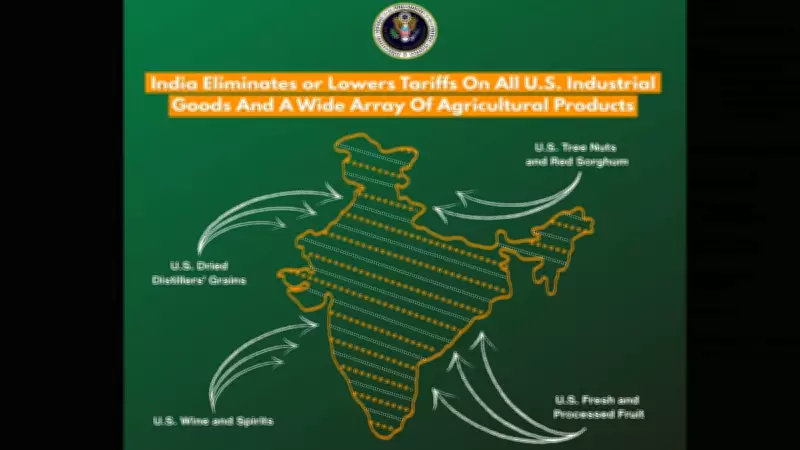
In a development with profound geopolitical implications, the United States Trade Representative's office has formally depicted Pakistan-occupied Kashmir and Aksai Chin as integral parts of India on its official website. This significant cartographic update coincides with the announcement of a major bilateral trade agreement between India and the United States, signaling a potential shift in Washington's stance on these long-disputed regions.
Details of the Official Depiction
The USTR's website now clearly shows the territories of PoK and Aksai Chin within India's sovereign boundaries on its interactive trade maps and related documentation. This representation marks a notable departure from previous ambiguous or neutral positions often adopted by international bodies regarding these areas. The move is seen as a strong symbolic gesture aligning with India's consistent claims over these regions, which have been under Pakistani and Chinese control, respectively, for decades.
Timing Amid India-US Trade Agreement
This cartographic recognition comes precisely as India and the United States have finalized a comprehensive trade deal aimed at boosting economic cooperation and reducing tariffs on key goods. Analysts suggest the timing is not coincidental but rather a strategic element of the broader diplomatic and economic partnership being forged between the two nations. The trade agreement itself is expected to enhance bilateral trade volumes significantly, covering sectors such as technology, pharmaceuticals, and agriculture.

Geopolitical Reactions and Implications
The US Trade Office's action is likely to draw sharp reactions from Pakistan and China, both of which have historically contested India's sovereignty over these territories. Pakistan has long administered PoK, while China controls Aksai Chin, a region it captured during the 1962 war. This development could potentially strain US relations with these countries, even as it strengthens ties with India. Experts note that such a clear territorial acknowledgment by a US government agency could influence other international organizations and foreign policies regarding the Kashmir and border disputes.
Historical Context and India's Position
India has consistently maintained that PoK and Aksai Chin are inseparable parts of its territory, citing historical, legal, and constitutional grounds. The Indian government has repeatedly called for the vacation of these areas by Pakistan and China, emphasizing that any resolution must respect India's territorial integrity. The US Trade Office's updated maps provide a form of external validation for India's stance, which could bolster its diplomatic efforts on the global stage.
Impact on Bilateral and Multilateral Relations
This move is expected to have ripple effects beyond just India-US relations. It may encourage other nations to reconsider their positions on these territorial issues, particularly in the context of increasing Indo-Pacific strategic alignments. Additionally, it could impact ongoing multilateral discussions involving these regions, such as those within the United Nations or other international forums. The development underscores the growing strategic convergence between India and the US, extending beyond trade into sensitive geopolitical domains.
In summary, the US Trade Representative's office's depiction of PoK and Aksai Chin as Indian territory represents a pivotal moment in international diplomacy, closely tied to the finalization of a significant India-US trade deal. This action not only reinforces India's territorial claims but also highlights the deepening partnership between the two democracies, with potential long-term implications for regional and global politics.






