India's political landscape is set for a major recalibration in 2026, with five key states and a union territory heading for high-stakes legislative assembly elections. The terms of the assemblies in Assam, Kerala, Tamil Nadu, West Bengal, and Puducherry are nearing their constitutional end, setting the stage for contests that will test governing parties, redefine opposition strategies, and offer critical insights into the nation's political undercurrents.
The Constitutional Clock and Electoral Battlegrounds
Acting under Article 324 of the Constitution and the Representation of the People Act, 1951, the Election Commission of India is gearing up to oversee these massive democratic exercises. Together, these regions account for over 800 assembly seats, representing a diverse cross-section of India from the Northeast and the East to the South and a crucial Union Territory.
Kerala: Can the Left Script History Again?
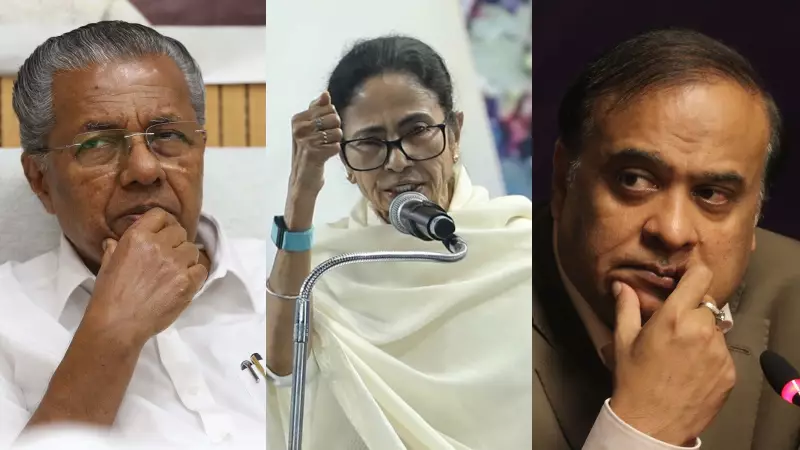
The term of the Kerala Legislative Assembly concludes on May 23, 2026, with polls likely in April. The 2021 election was historic, as the Communist Party of India (Marxist)-led Left Democratic Front (LDF) under Chief Minister Pinarayi Vijayan secured a second consecutive term—a feat not achieved in the state since 1977. The LDF won 99 of 140 seats, while the Congress-led United Democratic Front (UDF) managed 41. The BJP-led NDA lost its sole seat.

Vijayan, now eyeing a third term, has reshaped voter expectations through a governance model focused on welfare and pensions, moving away from blatant freebie politics. The 2021 election saw a 74.02% voter turnout, slightly lower than 2016's 77.35%. As 2026 approaches, the central question is whether the LDF can break another precedent or if the UDF can muster a credible challenge.
Assam: BJP's Fortress in the Northeast
In Assam, the assembly's term ends on May 20, 2026. The 2021 polls saw the BJP-led National Democratic Alliance (NDA) retain power with 75 seats in the 126-member house, marking the first time a non-Congress alliance won back-to-back terms. The Congress-led 'Mahajot' improved to 50 seats.
Post-election, Himanta Biswa Sarma took over as Chief Minister from Sarbananda Sonowal. The first phase of the 2021 polls saw an estimated 77% voter turnout. In 2026, issues of citizenship, identity, and regional aspirations will be at the forefront as the BJP defends its stronghold.
Tamil Nadu: Stability, Churn, and Federal Friction
Tamil Nadu's assembly term ends on May 10, 2026. The Dravida Munnetra Kazhagam (DMK)'s return to power in 2021 under M.K. Stalin ended a decade of AIADMK rule. While the DMK focuses on welfare schemes like the Tamil Nadu Assured Pension Scheme, the opposition space is in flux.
The AIADMK faces internal strife, while actor-politician Vijay's Tamilaga Vettri Kazhagam (TVK) is gaining traction. Frequent tensions between the DMK government and Governor R.N. Ravi over NEET and Centre-state relations add another layer. The 2021 polls saw a 72.81% voter turnout, with Karur district highest at 83.92% and Chennai lowest at 59.06%.
West Bengal: A Bipolar Battle for Federal Autonomy
The West Bengal Assembly's tenure concludes on May 7, 2026. The state's 294 seats make it one of India's largest electoral battlegrounds. In 2021, Mamata Banerjee's Trinamool Congress (TMC) scored a decisive victory, while the BJP emerged as the principal opposition with 77 seats—marking a clear bipolar shift as Congress and the Left were wiped out.
The election recorded a nearly 80% voter turnout, albeit amid sporadic violence. With ongoing confrontations between the TMC and the Centre over issues like MGNREGA funds and central agency raids, the 2026 contest is shaping up as a direct fight over governance control and federal autonomy.

Puducherry: The Union Territory's Disproportionate Significance
Puducherry's 30-member assembly sees its term end on May 15, 2026. Despite its small size, the UT holds significant political weight due to the role of nominated MLAs. In 2021, the NDA formed the government, significantly aided by nominated members aligned with the BJP, which became the second-largest party despite limited direct wins.
As Puducherry heads to the polls, questions about democratic representation, the influence of nominated legislators, and coalition stability will dominate the discourse, making it a fascinating microcosm of larger political dynamics.
Conclusion: The 2026 Political Weathervane
These five elections, spanning from the Northeast to the southern coast, are more than just regional contests. They represent a critical mid-point assessment of national political trends ahead of the next Lok Sabha election. The outcomes will test the resilience of incumbent governments like the LDF in Kerala and the BJP in Assam, the revival capabilities of national parties like the Congress in various states, and the evolving nature of federal politics in India. The battle lines are drawn, and the results will undoubtedly redraw significant parts of India's political map.