

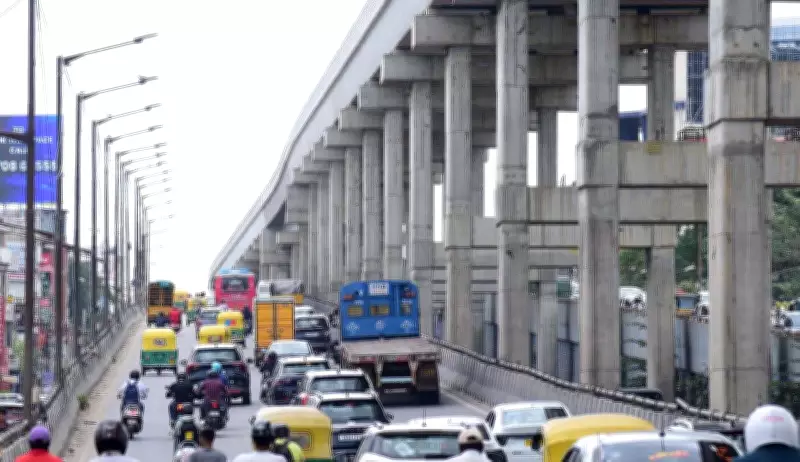
Bengaluru's long-awaited Blue Line Metro, a 19-kilometer stretch from KR Pura to Silk Board along the Outer Ring Road, is set to enter the testing phase in October, announced Bengaluru Development Minister Krishna Byre Gowda on Friday. This stretch, part of the Phase 2A project, has reached an advanced stage of construction, although work continues to lag at three critical locations.
Testing and Commissioning Timeline
After reviewing the progress of ongoing projects, Gowda stated, "Clear instructions have been issued to expedite work at these locations and ensure trial runs begin in October. After that, it will take five to six months to secure the required statutory clearances for commercial operations." However, the full KR Pura-Silk Board stretch may not be ready for testing by October. Due to delays in civil works, particularly at Marathahalli, the Bangalore Metro Rail Corporation Limited (BMRCL) is considering conducting oscillation trials by the Research Designs and Standards Organisation on the KR Pura-Marathahalli section first. BMRCL has started receiving trainsets for the Blue Line from BEML.
Key Challenges and Progress
BMRCL sources indicated that progress at key locations, including Baiyappanahalli depot connectivity, Marathahalli, Iblur, and Silk Board, will determine the corridor's commissioning schedule. While girder launching at Marathahalli was completed in March, several follow-up works remain underway.

Pink Line Deadline
Gowda set a fresh deadline for the elevated section of the Pink Line, a 7-kilometer stretch between Kalena Agrahara and Tavarekere. "This corridor has witnessed multiple delays. I've directed officials to ensure the line is commissioned by August 15," Gowda said. The 13.7-kilometer underground section from Tavarekere to Nagawara is likely to be operational only by March 2027, slightly later than BMRCL's target of December 2026. While station construction is largely complete, track laying, signaling, testing, and other system works are still in progress.
Other Metro Projects
Providing updates on other projects, the minister said the 26-kilometer airport Metro corridor from Hebbal to Kempegowda International Airport is expected to be operational by mid-2027, while the KR Pura-Hebbal section is likely to open by December 2027. Once the entire 58-kilometer Phase 2A and 2B network from Silk Board to the airport becomes operational, Bengaluru's Metro network is expected to expand to nearly 175 kilometers by March 2028.
Future Expansions
On future expansions, Gowda mentioned that the 45-kilometer Orange Line under Phase III, a proposed double-decker corridor, is being evaluated by RITES, with the report expected within 20 days. Once submitted, the proposal will go to the Centre for approval. Phase IIIA, which will connect Sarjapur to Hebbal, is awaiting the Centre's clearance.
Accountability and Delays
While BMRCL enjoys operational autonomy, it must equally face accountability for repeated delays in completing Metro projects and the inconvenience caused to commuters, said Gowda. He emphasized that Bengalureans have high expectations and BMRCL must adequately respond. Noting that the foundation stone for Namma Metro was laid in 2006, he said, "The deadlines set by BMRCL have been missed by one, two, and even three years. Despite spending nearly two decades on Metro expansion, BMRCL is still unable to indicate when several ongoing projects will be completed and opened for the public."

Road Occupancy and Site Management
Gowda directed Metro contractors to occupy only the minimum road space required for construction activities. Prolonged occupation of roads, he said, has worsened traffic congestion across the city. "If contractors continue to block portions of roads for three to five years, motorists will continue to suffer. We have instructed them to complete works within fixed timelines, clear occupied stretches, and move to the next section," he said. The minister expressed concern over construction debris and materials being left at work sites for extended periods, saying some Metro construction zones had effectively become dumping grounds. Poor site management, he added, has contributed to waterlogging during heavy rains. Referring to the Outer Ring Road stretch between Veeranapalya Junction and Hebbal, Gowda said traffic bottlenecks persist despite improvements at locations such as Kodigehalli and Manyata Tech Park.
Labour Shortage Impact
Metro construction work has been impacted by a shortage of laborers following recent assembly elections, including those held in West Bengal. According to BMRCL officials, nearly half the workers who returned to their home states to vote are yet to resume work. The shortage has particularly affected the Blue Line project connecting the city to Kempegowda International Airport, as well as ongoing work on the underground section of the Pink Line. Officials said more than 90% of workers engaged in Metro construction come from states such as Bihar, West Bengal, and Jharkhand. "Unlike many states where a sizable portion of the workforce is local, Bengaluru's metro projects are heavily dependent on migrant labor," an official said, adding that contractors have been directed to mobilize adequate manpower and minimize delays.





