

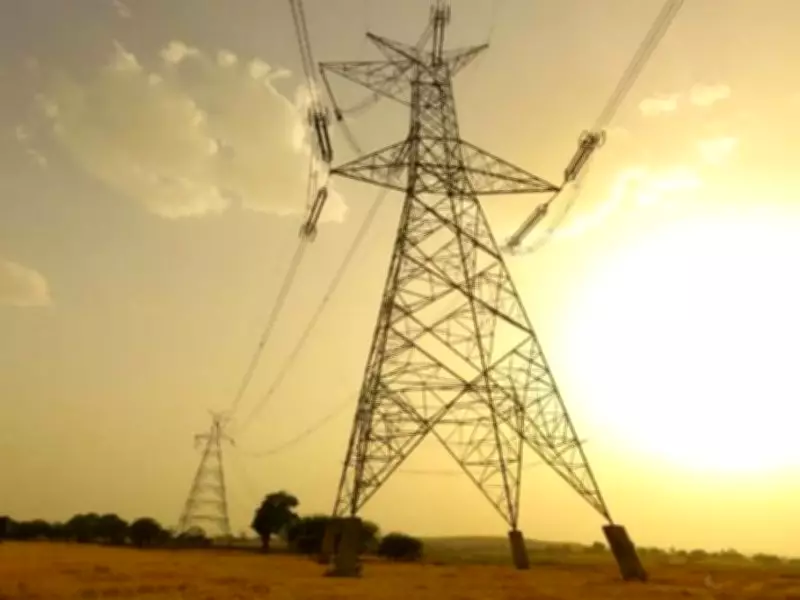
Chandigarh's peak power demand soared to 461 megawatts (MW) on Tuesday, June 30, 2026, marking the highest level recorded this June and the season's peak so far, according to data from the Chandigarh Power Distribution Limited (CPDL). The surge was driven by scorching daytime temperatures and hot, humid nights, pushing electricity consumption close to last year's levels as the monsoon continued to delay its arrival over the region.
The 461 MW figure is marginally lower than the 465 MW peak logged on June 12, 2025, which was the highest recorded last summer. Data accessed by The Tribune shows a steady climb in power demand over the past week: it stood at 400 MW on June 26, dipped slightly to 398 MW on June 27, then rose sharply to 412 MW on June 28, 437 MW on June 29, and finally to 461 MW on Tuesday.
This is not the first time this month that demand has crossed the 400 MW mark. On June 10, the city had logged 419 MW, after which the load eased over the following fortnight before the current upswing began in the past few days.

Mercury Rise Behind Demand Spike
The spike in power consumption has coincided with a sustained spell of high temperatures and oppressive humidity across the city. The southwest monsoon has yet to set in over the region, leaving both daytime highs and night-time lows elevated. This has prompted round-the-clock use of air-conditioners and cooling appliances, keeping the grid under sustained load and pushing demand closer to last year's peak.
Temperatures have been consistently above normal, with the heat index making conditions feel even more oppressive. Residents have reported relying heavily on cooling systems to cope with the heat, leading to increased electricity usage.
CPDL Says Supply Remained Stable
Chandigarh Power Distribution Limited (CPDL) said it had successfully met the city's highest power demand recorded so far this season, with the peak load touching 461 MW. The utility said the demand was expected to surpass this mark in the coming days as summer temperatures continued to rise.
CPDL maintained that it had ensured a reliable and uninterrupted power supply despite the sustained summer heat and rising consumption. This was achieved through proactive planning, continuous system monitoring, and dedicated network management. The utility said it had carried out preventive maintenance of transformers and feeders ahead of the peak season, and had round-the-clock operations and maintenance teams deployed to address faults and complaints promptly. It also urged consumers to use electricity judiciously and adopt energy-efficient appliances to support grid stability.
Residents Cite Outages in Pockets
However, even as CPDL maintained that supply across the city remained smooth, residents in certain pockets complained of power outages, frequent tripping, and voltage fluctuations over the past few days. These complaints point to localised stress on the network, even as the utility's overall figures showed the system holding up. Areas such as Sector 22 and parts of Manimajra reported intermittent cuts, according to local residents.
One resident from Sector 22 said, "We have been facing power cuts for the past three days, especially during the evening hours. It's very difficult to manage without fans and ACs in this heat." Another resident from Manimajra reported voltage fluctuations that damaged appliances.
Privatised Network Since 2025
Chandigarh's power distribution has been fully privatised since February 1, 2025. The UT Administration, on the directions of Administrator Gulab Chand Kataria, transferred 100 per cent of the erstwhile public utility's shares and operations to CPDL, a subsidiary of CESC (RP-Sanjiv Goenka Group), under the privatisation pact. CPDL currently draws 65 per cent of its power from renewable sources, including hydro, with the remainder sourced through thermal and nuclear power.
The utility serves around 2.36 lakh consumers across the city, including approximately 2.03 lakh residential connections, around 30,000 high-tension (HT) commercial and industrial connections, about 550 low-tension (LT) commercial and industrial connections, around 120 agricultural connections, and roughly 1,600 connections under other categories.

Rs 50-Crore Infrastructure Push
CPDL has invested over Rs 50 crore in upgrading the city's power distribution infrastructure to improve reliability ahead of the peak summer season. As part of the upgrade, four 20 MVA power transformers have been installed at grid sub-stations (GSSs) to augment system capacity and improve load management. Additionally, over 100 distribution transformers have been installed, augmented, or replaced at various locations across the city to ease pressure on the ageing network.
The utility has also laid 21 km of high-tension (HT) lines and 30 km of low-tension (LT) lines as part of the network-strengthening exercise, officials said. These upgrades are aimed at reducing outages and handling higher loads during peak summer months.
Outlook: Demand Likely to Test Fresh Highs
With temperatures showing no signs of relenting and the monsoon yet to arrive, the city's power demand is likely to test fresh highs in the coming days, officials indicated. The India Meteorological Department has forecast that monsoon may reach Chandigarh by the first week of July, but until then, residents can expect continued high power consumption and potential strain on the grid.
CPDL has advised consumers to set air conditioners at 24 degrees Celsius, use energy-efficient appliances, and avoid using high-power devices during peak hours to help manage demand. The utility also assured that it is monitoring the situation closely and will take additional measures if needed.





