

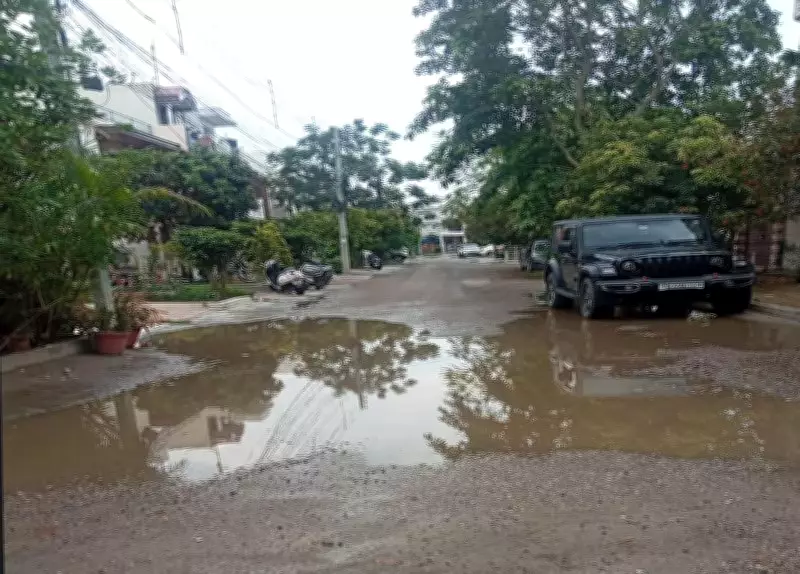
The Delhi Government has approved road strengthening projects worth Rs 657.99 crore aimed at improving more than 270 km of stretches across East, North and South Delhi. The decision was taken at a meeting of the Expenditure Finance Committee (EFC) chaired by Chief Minister Rekha Gupta on Wednesday. The project is expected to significantly improve road quality, safety and durability while bringing key stretches of the Capital’s road network in line with modern infrastructure standards.
Chief Minister's Statement on Road Safety and Quality
CM Rekha Gupta said, “The project will make Delhi’s roads safer, more durable and of better quality.” She added that the initiative would improve the condition of several important roads across the city and strengthen Delhi’s overall road infrastructure. A total of Rs 147.08 crore will be spent on strengthening 58.292 km of roads in the East maintenance zone, Rs 247.31 crore on 104.42 km in the North maintenance zone and Rs 263.61 crore on 107.92 km in the South maintenance zone.
Zone-Wise Tendering System Introduced
One of the key highlights of the initiative is the introduction of a zone-wise composite tendering system, which Delhi is adopting for the first time. Replacing the conventional road-wise tendering model, the new system is expected to improve project execution, monitoring and quality control while ensuring greater accountability. CM Gupta said, “The Delhi Government is committed to building stronger, more durable and better quality roads across the Capital.” She explained that road strengthening works will be carried out on a zone-wise basis to encourage participation from reputed construction firms and facilitate the use of modern machinery and advanced technologies.

Technical Details of Road Strengthening
The project will involve a comprehensive road strengthening process, including cold milling to remove damaged road surfaces, laying of dense bituminous macadam (DBM) as a strong base layer and bituminous concrete (BC) as the top surface layer. Additional works will include tack coat application, lane markings, zebra crossings, installation of road safety furniture such as signboards and reflectors and construction of kerb channels for better drainage.
Five-Year Defect Liability Period and Monitoring
All projects will carry a five-year Defect Liability Period (DLP). Under this provision, any pothole that develops during the liability period will have to be repaired within 48 hours. Progress of the works will be regularly uploaded on the GSDL/DPMG portal, supported by geo-tagged photographs taken before, during and after construction. To ensure quality standards, independent audits will be conducted by the CSIR-CRRI and the School of Planning and Architecture (SPA). The government has set a target of completing the road strengthening works by October 2026.
Environmental Sustainability and Safety Measures
Apart from improving road infrastructure, the project has also been designed with a focus on environmental sustainability and road safety. The government said all construction activities will strictly follow dust-control and air-quality norms prescribed by the Commission for Air Quality Management (CAQM). Emphasising the broader impact of the initiative, CM Gupta said, “The project is not limited to road strengthening alone but has also been designed with broader objectives of road safety and environmental protection.”






