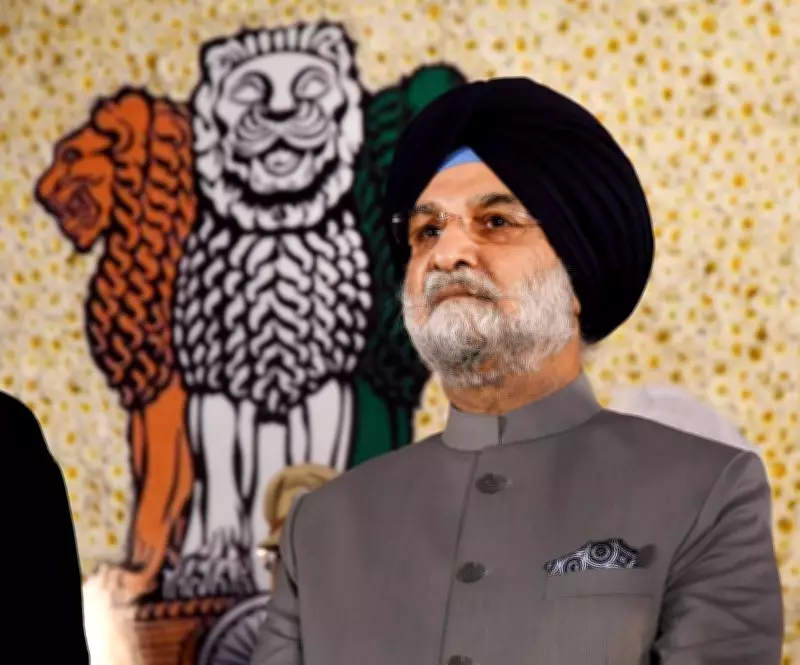
Delhi has witnessed significant easing of traffic congestion across 30 critical spots, according to a review by Lieutenant Governor Taranjit Singh Sandhu. The review highlighted the use of Artificial Intelligence (AI) and digital enforcement frameworks to address traffic snarls, which will be aggressively scaled up for 24/7 monitoring.
Review Meeting and Key Attendees
Sandhu on Tuesday reviewed the progress of measures undertaken to address the city's traffic situation, following directives issued during a meeting at the Todapur Headquarters of the Delhi Traffic Police on April 2. The meeting was attended by the Commissioner of Police, Special Commissioners of Police (Traffic), Joint Commissioners of Police (Traffic), and Deputy Commissioners of Police (Traffic).
Measurable Reduction in Congestion
Assessing the progress achieved through measures such as increased visibility of traffic police personnel, foot patrolling, engineering interventions, and technological solutions, the L-G was informed that congestion length, established using Google Maps at 15-minute intervals, declined to 32.43 km between April and June 25, 2026, from 48.25 km during January-March 2026. During April-June 2026, month-on-month congestion reduced across 34 of the 62 identified priority hotspots in the capital.

The police initially undertook works at 34 of the identified 62 hotspots and will subsequently take up works on the remaining 28 locations.
Notable Improvements at Specific Locations
The review found significant improvements at several locations. Traffic congestion reduced by 82.59% at Pushta Road (Kailash Nagar). Khajuri Chowk witnessed a 74.29% reduction in traffic snarls. The Teen Murti roundabout saw a 66.01% improvement in traffic flow.
Persistent Bottlenecks and Areas of Concern
Despite these successes, persistent bottlenecks at Dwarka Mor, Sarai Kale Khan, Mukarba Chowk, and Dabri Gol Chakkar were flagged as severe areas of concern requiring immediate infrastructural and operational interventions. Due to various reasons, including road construction, congestion increased at four identified hotspots: Naraina Flyover (1.28%), South-Ex Part-I (7.55%), Max Hospital Saket (14.93%), and Bhavbhuti Marg (349.87%).