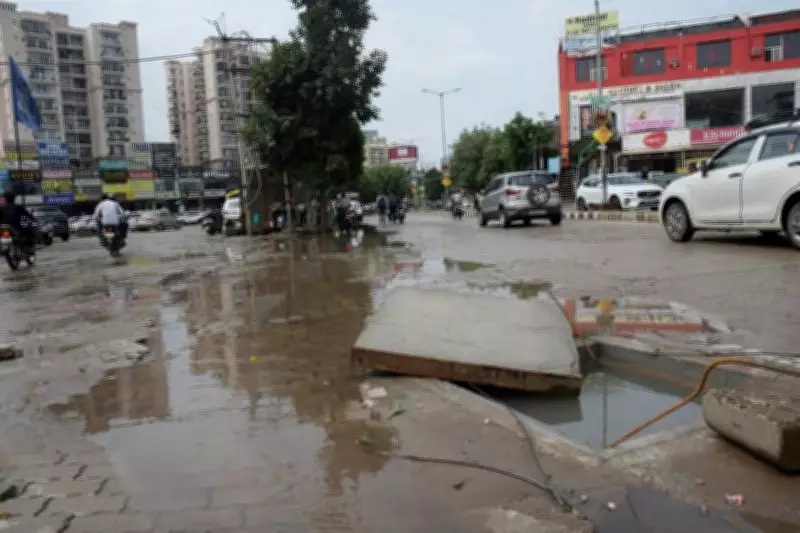
The monsoon season has once again laid bare the perilous state of India's public infrastructure. The death of a Mumbai resident who fell into an uncovered manhole hidden beneath rainwater, and the cave-in on the newly built Delhi-Dehradun Expressway, are not isolated incidents. They serve as grim reminders that civic negligence and poor engineering continue to endanger lives every rainy season.
Preventable Tragedy in Mumbai
The Mumbai tragedy was entirely preventable. An open manhole left unsecured during maintenance became an invisible death trap when heavy rain flooded the area. The suspension of civic officials and blacklisting of the contractor are necessary steps, but they come only after a life has been lost. Barricades, warning signs, and temporary covers are basic safety measures that should never be optional.
Last year, a woman and her three-year-old son in Delhi were swept into a flooded drain after their scooter skidded during heavy rain, underscoring the lethal consequences of poorly secured drainage infrastructure. According to reports, similar incidents occur across Indian cities every monsoon, highlighting a pattern of neglect.

Expressway Cave-In Points to Deeper Problems
The expressway cave-in points to a different but equally troubling problem. Roads do not collapse overnight. Poor drainage, inadequate soil stabilisation, and compromised construction quality allow water to erode the ground beneath the surface until the pavement gives way. Similar concerns arose after a spate of bridge collapses in Bihar in 2024, while Bengaluru and Mumbai continue to witness pothole-ridden roads causing injuries and traffic chaos every monsoon.
These incidents share a common denominator: failure to anticipate predictable risks. India experiences a monsoon every year, yet authorities continue to treat its consequences as unforeseen emergencies. Contractors face little accountability, inspections are often perfunctory, and maintenance remains reactive rather than preventive.
The Need for Institutionalised Safety Audits
The answer lies in institutionalising rigorous pre-monsoon safety audits, enforcing engineering standards, conducting independent quality checks, and making contractors legally accountable. Until prevention replaces damage control, every spell of rain will continue to expose the deep cracks in public governance.
As the editorial notes, "Civic negligence and poor engineering continue to endanger lives every rainy season." The time for reactive measures is over; proactive, accountable governance is the only way to ensure safe roads and drains for all citizens.