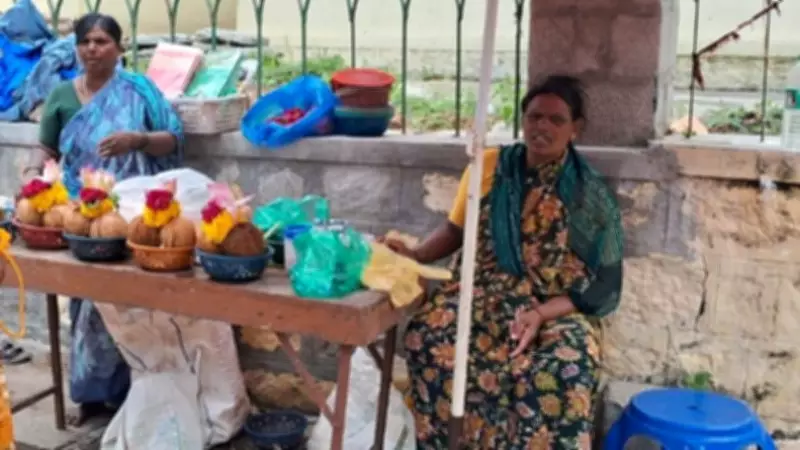
The first Ashada Friday at the Sri Chamundeshwari Temple atop Chamundi Hill in Mysuru saw a massive turnout of over one lakh devotees, but the religious fervor was accompanied by a blatant violation of the Plastic Waste Management Rules. Despite the enforcement of the Model Code of Conduct (MCC) and a blanket ban on single-use plastics in the state, hundreds of devotees were seen using plastic covers to carry offerings, prasadam, and other items.
Widespread use of plastic covers
Observers noted that plastic bags and covers were freely distributed by vendors and used by pilgrims throughout the hill area. The ban, which is part of Karnataka's stringent anti-plastic drive, prohibits the use of any single-use plastic items, including covers, plates, and cups. However, on this auspicious day, compliance appeared to be minimal. Temple authorities had made arrangements for cloth bags and eco-friendly alternatives, but many devotees either were unaware or chose to ignore the restrictions.
“The use of plastic is rampant, especially during large festivals. Despite the MCC ban, we saw plastic covers everywhere. It is disheartening that our devotion is harming the environment,” said a local environmental activist, requesting anonymity.

Enforcement challenges
The MCC is typically enforced during election periods to ensure a level playing field, but it also includes provisions for the ban on single-use plastics to reduce environmental pollution. However, the sheer number of devotees—over one lakh—made enforcement difficult. Officials from the Mysuru City Corporation (MCC) and the Karnataka State Pollution Control Board were present, but they struggled to prevent the usage. “We have deployed teams to confiscate plastic, but with such a large crowd, it is not possible to check everyone. We rely on public cooperation,” a senior MCC official stated.
Next Ashada Fridays are scheduled for July 24, 31, and August 7, and the Sri Chamundeshwari Vardhanti falls on August 4. Environmental groups are urging authorities to step up vigilance and awareness campaigns to ensure the remaining festivals are plastic-free.
Impact on environment and future steps
The non-biodegradable plastic waste left behind by the devotees could take hundreds of years to decompose, posing a serious threat to the fragile ecosystem of Chamundi Hill. The hill is home to diverse flora and fauna, and the accumulation of plastic litter affects both wildlife and soil health. In response, local NGOs have planned clean-up drives and are demanding stricter penalties for violators.
“We cannot let tradition become an excuse for environmental degradation. We appeal to all devotees to use cloth bags or containers. The government must also impose heavy fines on those found using or selling plastics,” said a representative from the Mysuru Green Forum.
The incident highlights the gap between policy and implementation. While the ban is in place, ground-level enforcement remains a challenge, especially during large gatherings. Authorities are now considering deploying more personnel and setting up checkpoints at the base of the hill for upcoming Ashada Fridays.