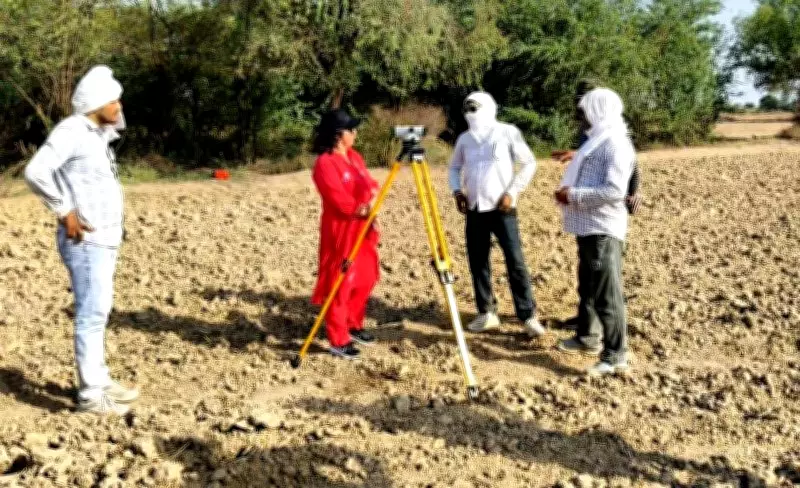
The Agriculture and Farmers’ Welfare Department has launched a scientific reclamation programme to restore the productivity of agricultural land affected by waterlogging and salinity across Rohtak district. Under the World Bank-assisted Water Secure Haryana Programme for 2026-27, projects covering approximately 38,200 acres are being planned, including the installation of 453 vertical drainage tube wells in several villages.
Extent of land degradation
Around 2.44 lakh acres of land spread across 116 villages in Rohtak district are affected by waterlogging and salinity, severely impacting crop growth and reducing agricultural productivity. Divisional Soil Conservation Officer Neena Sehwag said that modern vertical drainage technology and sub-surface drainage technology are being adopted to address the challenge.
Vertical drainage achievements
Under the vertical drainage programme, nearly 8,400 acres in villages including Chiri, Khark Jatan, Nandal, Basantpur, Baland, Ghilod Kalan, Dhamar, Bahu Akbarpur, Kisrenti, Balambha and Taimurpur have already been reclaimed through the installation of 81 vertical drainage tube wells. Currently, reclamation work covering around 8,500 acres is underway in Mayna, Mokhra Kheri, Atail, Samchana, Masoodpur and Ajaib villages, where 91 additional vertical drainage tube wells are being installed.

Sub-surface drainage progress
Under sub-surface drainage technology, works for reclaiming approximately 4,340 acres in Rithal, Kiloi Khas, Kiloi Dopana and Asan villages were allotted during 2025-26. Of these, reclamation of nearly 600 acres in Asan village has already been completed. Sehwag added that under the state scheme “Reclamation of Waterlogged Land and Saline Soil”, works for reclaiming around 3,400 acres in Shimli, Kalanaur Kalan and Muradpur Tekna are at the tender allotment stage, with a proposal for installing 45 vertical drainage tube wells. Proposals are also being prepared under the World Bank programme for reclaiming nearly 1,500 acres of saline land in Dobh, Bhali and Baniyani villages.
Technology selection criteria
Deputy Commissioner Sachin Gupta explained that vertical drainage technology is adopted in areas where groundwater electrical conductivity is below 6,000 µS/cm, while sub-surface drainage technology is used in areas with higher salinity levels. Under the latter system, underground laterals and collectors drain excess saline water into a sump, from where it is safely discharged through drains. Proper drainage infrastructure is essential as the extracted saline water is unsuitable for drinking and irrigation and cannot be released into canals.
Expected impact
According to Gupta, these interventions are expected to significantly improve soil health, enhance agricultural productivity and provide long-term relief to farmers affected by waterlogging and salinity in Rohtak district.