West Bengal Chief Minister Suvendu Adhikari Unveils Plan to Revive Historic Gorkha Force
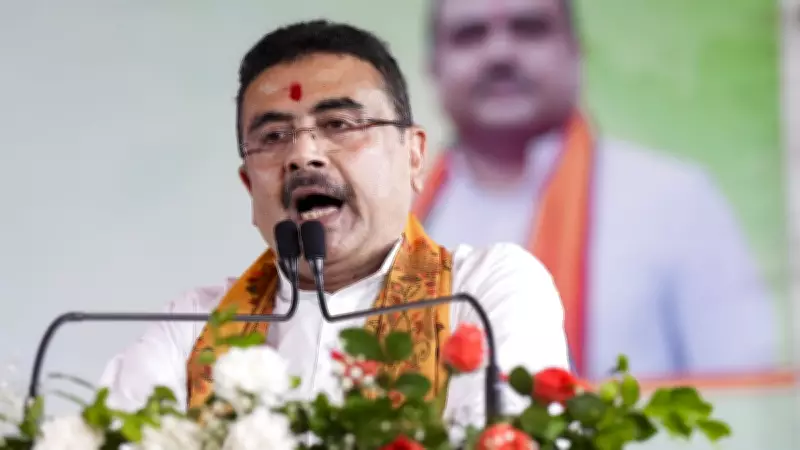
In a significant move aimed at bolstering security and preserving historical legacy, West Bengal Chief Minister Suvendu Adhikari has announced plans to revive the Eastern Frontier Rifles (EFR), a historic Gorkha force that dates back to the colonial era. The announcement was made during a press conference in Kolkata on June 17, 2026, where Adhikari outlined the state government's vision to restore the force's former glory.
What is the Eastern Frontier Rifles?
The Eastern Frontier Rifles, originally raised in 1839 as the Sylhet Light Infantry, is one of the oldest paramilitary forces in India. It was primarily composed of Gorkha soldiers and served under the British East India Company. Over the years, the force underwent several reorganizations and was eventually integrated into the Assam Rifles. However, its legacy remains deeply rooted in the region's military history.
The EFR played a crucial role in maintaining law and order in the eastern frontiers of British India, particularly in the tea gardens of Assam and the border areas of Bengal. The force was known for its discipline, bravery, and loyalty, earning accolades from successive British administrations.

Revival Plans and Objectives
Chief Minister Adhikari stated that the revival of the Eastern Frontier Rifles is part of his government's broader strategy to enhance internal security and create employment opportunities for the youth, especially in the Gorkha community. The revived force will be deployed for border security, counter-insurgency operations, and disaster response in the northeastern region.
“The Eastern Frontier Rifles represent a proud tradition of valor and service. By reviving this force, we not only honor our history but also strengthen our security apparatus,” Adhikari said. The state government has allocated an initial budget of ₹500 crore for the first phase of the revival, which includes recruitment, training, and infrastructure development.
The force will be headquartered in Siliguri, a strategic location near the borders of Nepal, Bhutan, and Bangladesh. Recruitment will prioritize candidates from the Gorkha community, with a focus on reserving 50% of the positions for local youth from the Darjeeling hills and Dooars region.
Political and Social Implications
The announcement has garnered mixed reactions. While many in the Gorkha community have welcomed the move as a recognition of their historical contributions, opposition parties have accused the state government of playing politics with security forces. The Trinamool Congress, which previously governed the state, criticized the plan as a “publicity stunt” aimed at garnering votes ahead of the next assembly elections.
Nevertheless, the revival of the Eastern Frontier Rifles is seen as a step towards addressing long-standing demands of the Gorkha community for greater representation in security forces. It also aligns with the central government's focus on modernizing paramilitary forces and enhancing border security.
Historical Significance
The Eastern Frontier Rifles have a storied past. During World War I, the force served in Mesopotamia and Palestine, earning battle honors. After India's independence, it was amalgamated into the Assam Rifles in 1950. However, the distinct identity of the EFR has been a subject of nostalgia and pride among Gorkha veterans.
Historians have noted that the revival of such a force could help preserve the unique martial traditions of the Gorkha community, which has been an integral part of India's security forces for centuries. The move also underscores the cultural and historical ties between West Bengal and the Gorkha regions.
Future Outlook
The state government plans to complete the first phase of recruitment within the next 18 months, with an initial strength of 5,000 personnel. The force will be equipped with modern weaponry and communication systems, and training will be conducted in collaboration with the Indian Army's Gorkha regiments.
Chief Minister Adhikari emphasized that the revived Eastern Frontier Rifles will be a model paramilitary force, combining tradition with modernity. “We are not just reviving a force; we are reviving a legacy of courage and service,” he said.