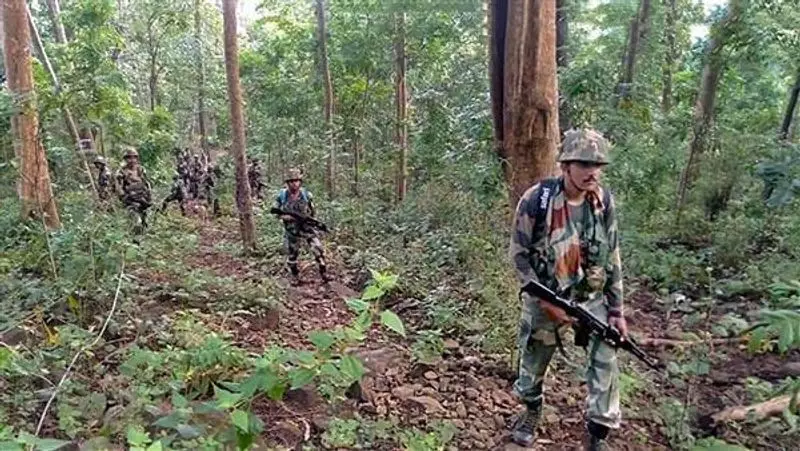
In a significant development for security forces in the region, a total of 63 Naxalites have officially renounced violence and surrendered in Chhattisgarh's Dantewada district. This collective surrender marks one of the largest in recent times and deals a substantial blow to the operational capabilities of Left-Wing Extremist groups in the area.
A Surrender of High-Value Individuals
The group that laid down arms is not comprised of low-level cadres alone. Among the 63 surrenderees, a staggering 36 individuals were carrying cumulative cash rewards on their heads totaling more than ₹1.19 crore. This indicates that many of those who surrendered were wanted for serious offences and held significant positions within the Maoist organizational structure. Their decision to join the mainstream is a testament to the sustained efforts of confidence-building measures.
The surrender ceremony took place at the Dantewada police headquarters. The event was overseen by senior police officials who welcomed the former insurgents back into the fold of society. The individuals submitted themselves before the authorities, handing over weapons and other paraphernalia associated with the banned outfit.

Government Policy and Rehabilitation as a Catalyst
This mass surrender is largely attributed to the state government's persistent and strategic outreach initiatives. Security forces have combined their operational campaigns with consistent community engagement and the promotion of the state's surrender and rehabilitation policy. This policy promises a safe passage, legal aid, and financial assistance for rehabilitation to those willing to abandon the path of violence.
The 'Lon Varratu' campaign, which translates to 'Return to Your Home' in the local Gondi dialect, has been particularly influential. This campaign, spearheaded by the Dantewada police, involves direct communication with Naxalites and their families in remote villages, urging them to disengage and avail the benefits of the surrender policy. The success of this humane approach is now visibly yielding results.
Implications for Security and Development
The surrender of such a large contingent, especially one containing many rewarded cadres, has immediate and long-term implications. It severely weakens the military and logistical network of the Naxalites in the Bastar region, particularly affecting their intelligence gathering and local support systems. The event also sends a powerful psychological message to other active cadres, potentially encouraging more to follow suit.
For the local administration, this development opens avenues for accelerated development work in areas that were previously under the influence of extremists. With a reduced security threat, government schemes related to road construction, education, and healthcare can reach the interior villages more effectively. The successful rehabilitation of these 63 individuals will also serve as a crucial case study for future peace-building efforts in other conflict-affected zones of the country.
While challenges remain, the surrender in Dantewada is being viewed as a milestone. It underscores the effectiveness of a dual strategy combining firm security action with persuasive welfare measures. The focus now shifts to ensuring the proper rehabilitation of these individuals, helping them reintegrate into society as productive citizens, which will be the ultimate measure of this operation's success.