

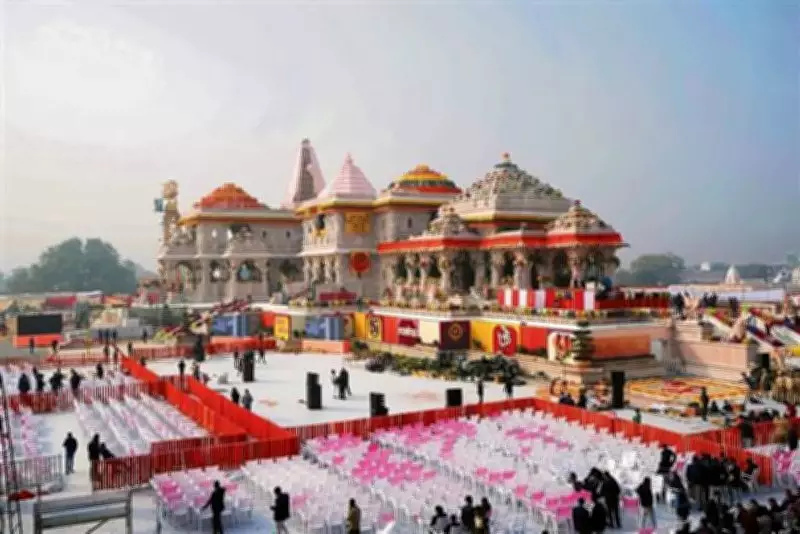
The Faizabad Bar Association on Monday passed a resolution barring its members from representing the eight individuals arrested in connection with the embezzlement of donations at the Ram Temple in Ayodhya. Lawyers who defy the resolution will face a penalty of Rs 5 lakh. The decision has drawn sharp criticism from legal experts who argue it violates the fundamental right to legal counsel.
Bar Association's Stance and Threats
Bar Association secretary Shailendra Jaiswal stated, "The sentiments of all of us have been hurt by the theft of temple offerings. The lawyers of Faizabad have agreed not to plead on behalf of the arrested accused." The association also demanded that three individuals associated with the temple management—Champat Rai, Anil Mishra, and Gopal Rao—who were not named in the FIR, leave Ayodhya within three days. Failure to comply, the association warned, would result in a blockade of the temple town.
The Eight Accused and the Investigation
The arrested individuals—Avinash Shukla, Anukalp Mishra, Lav Kush Mishra, Manish Kumar Yadav, Karunesh Pandey, Ram Shankar Mishra, Subhash Srivastava, and Ramashankar alias Tinnu Yadav—were involved in counting cash and valuables received as donations at the Ram Temple. They were arrested after an FIR was registered based on a preliminary report from a Special Investigation Team (SIT) appointed by the state government.

Historical Precedent and Legal Concerns
The Faizabad Bar Association had taken a similar decision in 2005 following a terror attack on the then makeshift Ram Temple. Similar resolutions were passed by local bar bodies in the 26/11 Mumbai terror attacks (2008) and the Nirbhaya gang rape and murder case (2012). However, legal experts have consistently condemned such actions.
Senior counsel Sanjay Hegde remarked, "Refusing to represent an accused in a court where a lawyer normally practises amounts to professional misconduct." Former chairman of the Bar Council of Delhi, KK Manan, called the resolution "unfortunate," emphasizing that "an accused is presumed to be innocent until proven guilty and, therefore, lawyers must not refuse legal assistance to an accused." Manan also noted that every accused has the right to legal assistance from a lawyer of their choice, and a bar association cannot prevent lawyers from fulfilling their duty.
Impact on the Accused and the Justice System
The resolution effectively denies the eight accused their right to legal representation, a cornerstone of the justice system. Legal experts warn that such actions undermine the presumption of innocence and could lead to unfair trials. The Bar Council of India may need to intervene to ensure that professional ethics are upheld and that the accused receive a fair defense.






