

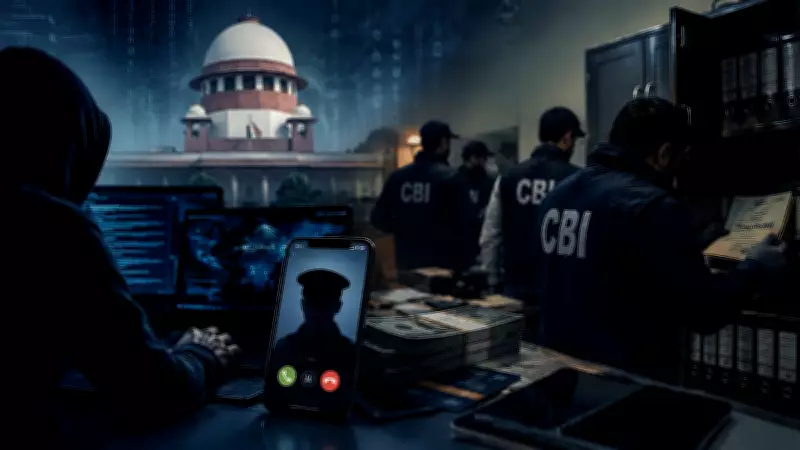
The Central Bureau of Investigation (CBI) conducted raids at 80 locations across India on Wednesday in connection with a major cyber fraud operation that used a fake Supreme Court website to run digital arrest scams. The operation culminated with the arrest of two accused individuals, B Naresh and Sanjib Saha, from Chennai and Kolkata respectively, according to a CBI spokesperson.
Modus operandi of the scam
The fraudsters created a counterfeit website mimicking the official Supreme Court of India portal. Victims were contacted via phone calls or messages, falsely claiming that a legal case had been filed against them. The scammers then threatened the victims with immediate arrest unless they paid a fine through digital payment methods. The fake website was used to lend legitimacy to the threats, displaying fabricated court orders and notices.
The CBI investigation revealed that the scam network operated across multiple states, including Tamil Nadu, West Bengal, Delhi, Maharashtra, and Uttar Pradesh. The raids were conducted simultaneously at 80 locations, leading to the seizure of mobile phones, laptops, SIM cards, bank documents, and other incriminating materials.

Arrests and ongoing investigation
The two arrested individuals, Naresh and Saha, are believed to be key operatives in the syndicate. They were produced before a court and remanded to CBI custody for further interrogation. The agency is probing the extent of the network and its links to other cybercrime operations.
According to the CBI, the scammers primarily targeted elderly individuals and those with limited digital literacy. The total amount defrauded is yet to be ascertained, but preliminary estimates suggest it could run into crores of rupees. The agency has urged the public to verify any such communication directly with the Supreme Court or local police authorities.
Digital arrest scams on the rise
Digital arrest scams have become increasingly common in India, with fraudsters impersonating law enforcement agencies to extort money. The use of a fake Supreme Court website marks a new level of sophistication. The CBI has advised citizens to remain vigilant and not to share personal or financial information over unsolicited calls or messages.
The investigation is ongoing, with the CBI analyzing seized digital evidence to identify other accomplices and victims. The agency has also alerted cybersecurity agencies to take down the fake website and prevent similar domains from being registered.






