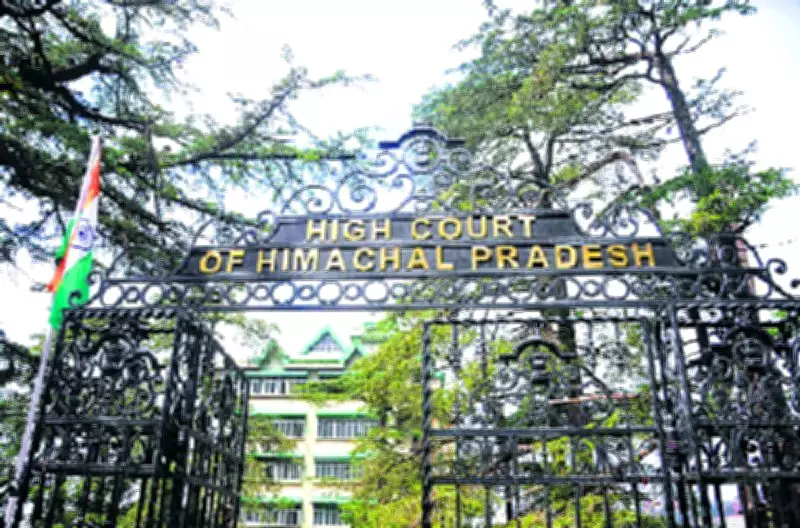
The Himachal High Court has stayed the state government’s June 24 notification dissolving Panchayati Raj Institutions (PRIs) in the Keylong subdivision of Lahaul and Spiti district and the Pangi subdivision of Chamba district, holding that the petitioners had made out a prima facie case that their statutory and constitutional tenures had been unlawfully curtailed.
Court Orders Continuation of Elected Representatives
A Division Bench comprising Chief Justice Gurmeet Singh Sandhawalia and Justice Bipin Chander Negi directed that the petitioners, along with all similarly placed elected representatives, would continue in office until further orders.
The state government had issued the notification under Section 120(4) of the Himachal Pradesh Panchayati Raj Act, 1994, read with Article 243E of the Constitution, dissolving gram panchayats, panchayat samitis and zila parishads in the affected areas with immediate effect.

Petitioners Challenge Premature Termination
The petitioners challenged the notification, contending that their elected terms were due to expire on October 17. They argued that the fresh panchayat elections conducted in May this year pursuant to the Supreme Court’s directions in the Principal Secretary, State of Himachal Pradesh vs Dikken Kumar Thakur and Others case could not result in the premature termination of the tenure of the existing elected bodies.
Relying on Article 243E of the Constitution, the petitioners submitted that panchayats are guaranteed a five-year tenure and that their term cannot be curtailed except in accordance with law.
State’s Defence and Amendment Act
The state defended the notification by invoking the newly inserted Section 120(4) of the Himachal Pradesh Panchayati Raj Act, introduced through the Himachal Pradesh Panchayati Raj (Amendment) Act, 2025, which came into force on January 9. The amendment provides that panchayats constituted later due to force majeure or similar circumstances shall have a tenure concurrent with other panchayats in the state.
The Bench, however, observed that the amendment operated prospectively and could not be invoked to curtail the tenure of panchayats elected before its enactment. The court held that the petitioners had a vested right to continue in office for their constitutionally protected tenure and that the impugned notification prima facie infringed upon that right.
Inconsistent Notifications Noted
The Bench also noted that the state had initially issued a notification on June 6 fixing October 18 as the date for the first meeting of the newly elected representatives, consistent with the expiry of the existing panchayats’ tenure. However, by a subsequent notification issued on June 24, the date was advanced to June 27, effectively bringing the newly elected bodies into office before the existing elected representatives completed their terms.