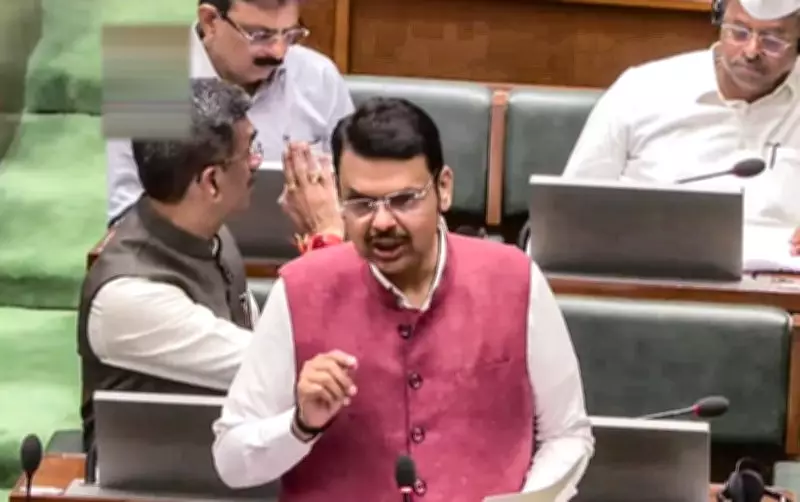
Maharashtra Chief Minister Devendra Fadnavis announced on Tuesday that the stringent Maharashtra Control of Organised Crime Act (MCOCA) will be invoked against criminal gangs found using minors to commit offences. He also confirmed that individuals providing weapons, money, or other assistance to juveniles would be treated as participants in organised crime.
Replying to a discussion during Question Hour in the state legislative Assembly, Fadnavis stated that if investigations establish a gang nexus, accused persons will be booked under MCOCA even if they were not physically present at the crime scene. The law, enacted in 1999, provides police and special courts with broader powers to dismantle organised crime networks.
Government amendments to strengthen legal action
Fadnavis said the government has brought amendments to strengthen legal action against those who directly or indirectly induce minors into crime. He clarified that eight murder incidents in Jalna district, allegedly involving minor accused, did not reveal any organised gang angle and were primarily the result of family disputes. However, he acknowledged growing concerns that criminal syndicates are exploiting juvenile laws to use minors for illegal activities.

“There are instances where children are being induced with money and used to commit crimes. We take this seriously,” the Chief Minister said.
High-level committee to study juvenile crime
Fadnavis also announced that the state will constitute a high-level committee to scientifically study the increasing involvement of juveniles in crime and recommend measures, including proposals that may require central government intervention. The committee will examine the problem, recommend state-level actions, and identify issues to be pursued with the Union government.
Responding to Shiv Sena MLA Arjun Khotkar, who alleged that gangs are increasingly using minors for crimes, illegal liquor trade, and narcotics trafficking because they receive protection under juvenile laws, Fadnavis said the government has already moved amendments to tighten the law. Khotkar urged the invocation of organised crime provisions against gangs recruiting juveniles, crime mapping in Jalna district, and counselling for minors after release from juvenile homes. He cited instances of schoolchildren carrying knives, warning the trend poses a serious threat to society.
MCOCA provisions for gangs using minors
“Provisions of the MCOCA will be invoked against gangs found using minors to commit offences,” Fadnavis told the House. He added that people who directly or indirectly encourage minors to commit crimes, provide weapons, money, or logistical support, or otherwise aid them, will face stricter punishment. If any gang-like activity is established, such persons will also be booked under the state's organised crime law, even if absent from the crime scene.
On demands to reduce the age at which juveniles can be tried as adults, Fadnavis said such a decision can only be taken by the Centre. He noted that under existing legal provisions and Supreme Court rulings, children above 16 years can, in certain heinous offences such as murder and rape, be tried as adults after following the prescribed legal process.
The Chief Minister accepted Khotkar's suggestion to set up a high-level committee for a scientific study of the issue. The committee's recommendations will be considered by the state government, while proposals requiring changes in central law will be forwarded to the Union government for appropriate action.