

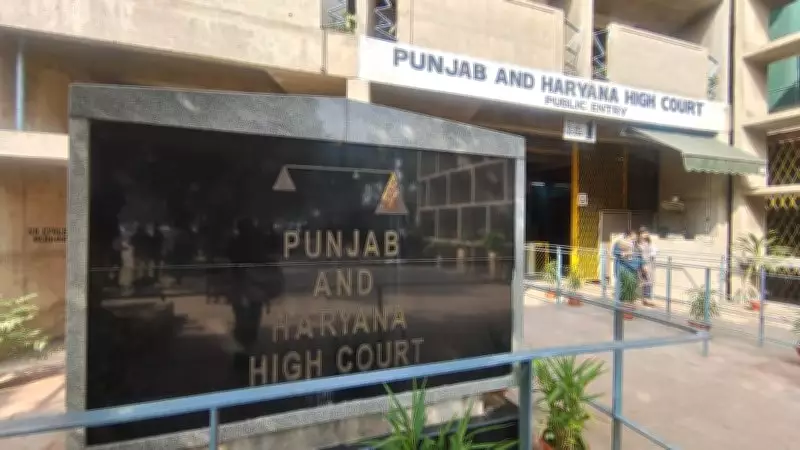
High Court Reopens with Massive Backlog
The Punjab and Haryana High Court will reopen on Wednesday after its month-long summer vacation with 4,22,951 pending cases. According to the latest National Judicial Data Grid (NJDG) data, the pending docket comprises 2,56,774 civil and 1,66,177 criminal cases. While the overall pendency has remained almost unchanged over the past six months, the age of the backlog is a major concern.
Nearly 1.25 Lakh Cases Pending for Over a Decade
The NJDG data reveals that 1,24,855 cases have remained pending for more than 10 years, including 74,049 civil and 50,806 criminal matters. Another 1,00,127 cases have been awaiting adjudication for between five and 10 years. Overall, 3,30,219 cases, or 78.08 per cent of the pending docket, are more than a year old.
Court Operates with Only 55 Judges
The high court is functioning with only 55 judges against a sanctioned strength of 85, a vacancy of 30 judges. Despite this shortage, the court has broadly kept pace with fresh filings during the first half of the calendar year. Between January and the summer recess, 79,660 fresh cases were instituted, while 81,689 cases were disposed of, enabling the court to marginally outpace fresh institutions.

Monthly Figures Show Marginal Increase
In the month preceding the summer vacation, 19,936 fresh cases were instituted against 19,445 disposals, resulting in a marginal increase in pending cases. Court insiders note that such month-to-month variations are routine, with pendency rising or falling depending on the balance between fresh institutions and disposals.
Pending Judge Elevations and Retirements
The high court awaits reinforcement of its Bench. The Supreme Court Collegium has approved the elevation of 10 advocates as judges, while recommendations for more appointments are pending. However, three sitting judges are due to retire later this year, so the vacancy position is expected to remain a concern.
Administrative Focus on Reducing Old Pendency
The court has prioritized long-pending matters, cases involving senior citizens, women, juveniles and differently-abled persons, corruption cases, matters remanded by the Supreme Court, and cases with stayed subordinate court proceedings. A structured listing policy ensures old matters are regularly taken up, and connected cases are prioritized. Judges have continued hearings beyond normal court hours to improve disposals.
Judges More Conscious of Disposal
“What earlier took years is now often decided in one or two effective hearings,” a senior functionary remarked, adding that judges are “more conscious of disposal than ever before,” with all-time highs being registered by several Benches.
Challenge Ahead: Reducing Long-Pending Cases
As the high court begins the second half of the year, the figures suggest that while it has largely kept pace with fresh institutions despite a depleted Bench, the real challenge will be to steadily reduce the large stock of long-pending cases, particularly the nearly 1.25 lakh matters that have remained on its docket for more than a decade.






