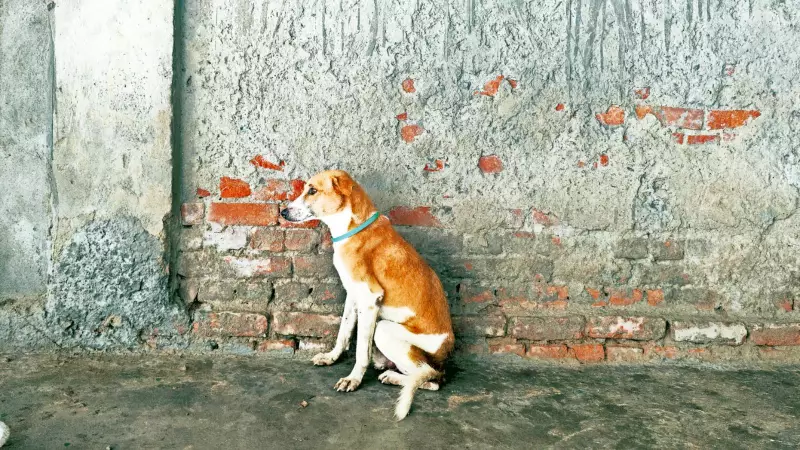
The Supreme Court of India, while hearing a crucial case on the menace of stray dogs, made a significant observation on Thursday: canines possess the ability to smell human fear and can specifically target individuals who have previously suffered dog bites. The bench, however, firmly reiterated that it has not issued any blanket directive for the removal of all stray dogs from streets across the country.
Court's Observation on Canine Instincts
Presiding over a three-judge bench hearing a suo motu case, Justice Vikram Nath remarked, "A dog can always smell a human who is afraid of dogs and who has suffered a dog bite, and he will always attack." This statement came in response to a counsel's submission that dogs can be "sometimes unpredictable." Justice Sandeep Mehta, also on the bench, sought a clearer correlation from the lawyers, prompting a detailed discussion on the unintended consequences of removing strays.
The court is currently hearing applications seeking modification of its order from November 7, 2025. That order had directed the removal of dogs from the premises of sensitive institutions like schools, hospitals, sports complexes, bus stands, and railway stations. The canines were to be relocated to designated shelters after due sterilisation and vaccination as per the Animal Birth Control (ABC) Rules, with a condition that they not be released at the same location.

The Debate: Re-release, Ecology, and Huge Costs
Senior advocate Shyam Diwan, representing NGO PETA, supported the formation of an expert committee. He pointed out that the ABC Rules actually advocate for the re-release of sterilised dogs in their original territory, a point of contention with the court's earlier order. "Experts can suggest where re-release can be ruled out," he submitted.
Another senior advocate, C U Singh, highlighted an ecological angle. He argued that dogs help control rodent populations in cities like Delhi, and their removal could lead to a surge in disease-carrying rodents. "The effect of removal of dogs is that the rodent population shoots up. And it leads to unintended consequences," Singh stated. In a lighter vein, Justice Mehta suggested, "Dogs and cats are enemies. Cats kill rodents. So, we must promote more cats and lesser dogs. That will be the solution."
The hearing also brought to light the staggering financial and logistical implications of the court's directions. Senior advocate Krishnan Venugopal, appearing for an animal rights advocate, informed the bench that only 66 ABC centres in India are currently accredited. He estimated the cost of implementing the proposed measures could soar to Rs 26,800 crore, requiring the construction of 91,800 new shelters, with no budgetary allocation currently in place.
Practical Challenges and the Path Ahead
Practical challenges were underscored by other lawyers. A counsel for an organisation named Lok Abhiyan cited an incident where a sterilised stray dog, after being released, bit four people, questioning the policy of re-release after an aggressive bite. Senior advocate Dhruv Mehta, appearing for an intervenor, pointed out the sheer scale of the problem, noting that Delhi alone had an estimated 5.6 lakh stray dogs as per the 2009 census. "Where does one keep them if they are captured?" he asked.
Throughout the proceedings, the bench clarified its stance. Justice Mehta stated, "We are repeating. We have not directed removal of every dog from the street. The direction is to treat them as per (ABC) Rules." The only other direction, he said, pertained to removing dogs from institutional premises, which is now under scrutiny.
The Supreme Court has adjourned the hearing, which will continue on Friday, as it seeks a balanced solution between public safety and animal welfare amidst complex ecological and practical realities.