

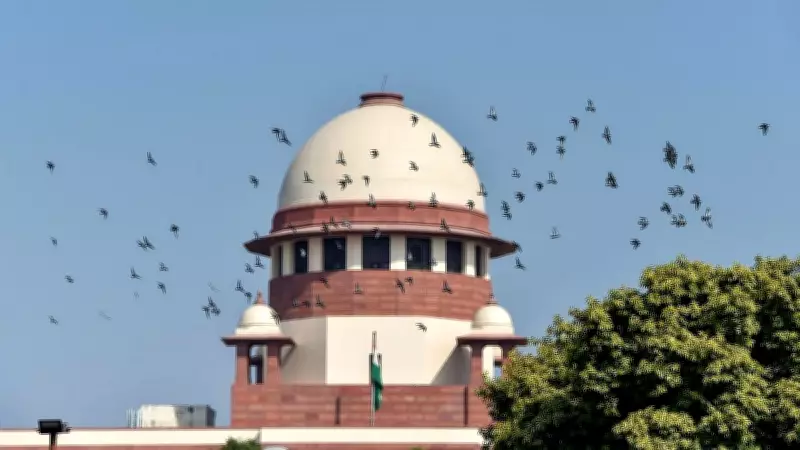
The Supreme Court has reduced the sentence of a man convicted for causing the death of a watch seller in 1997, taking into account the long passage of time and the convict's family circumstances. Fifteen days before the incident on February 12, 1997, the deceased, Padam Singh Shahi, had sold a watch to Manua alias Puran for Rs 500. The watch reportedly malfunctioned, leading to a dispute that escalated into a fatal altercation.
Background of the Case
According to court records, Manua alias Puran had purchased a watch from Padam Singh Shahi, but the watch stopped working shortly after. When Manua approached Shahi for a refund or replacement, an argument ensued. The confrontation turned violent, resulting in Shahi sustaining fatal injuries. Manua was subsequently arrested and charged with murder. In the initial trial, he was convicted under Section 302 of the Indian Penal Code (IPC) for murder and sentenced to life imprisonment.
Supreme Court's Intervention
After years of litigation, the case reached the Supreme Court. The bench, comprising Justices, reviewed the facts and arguments. The court noted that the incident occurred 25 years ago and that the convict had already served a significant portion of his sentence. Additionally, the court considered Manua's family responsibilities, including his elderly parents and young children, who depend on him for support.

Reduction of Sentence
The Supreme Court reduced the sentence from life imprisonment to the period already served, which was approximately 14 years. The court also imposed a fine of Rs 50,000 on the convict, to be paid to the family of the deceased as compensation. The judgment stated that while the act was serious, the long delay and the convict's rehabilitation potential warranted a reduced sentence. The court emphasized the need for proportionality in sentencing, especially in cases where the crime was not premeditated.
According to legal experts, this decision reflects a trend in Indian courts to consider the time elapsed and the convict's conduct during incarceration when deciding sentence reductions. The case highlights how minor disputes can escalate into tragedies, and the importance of alternative dispute resolution mechanisms.






