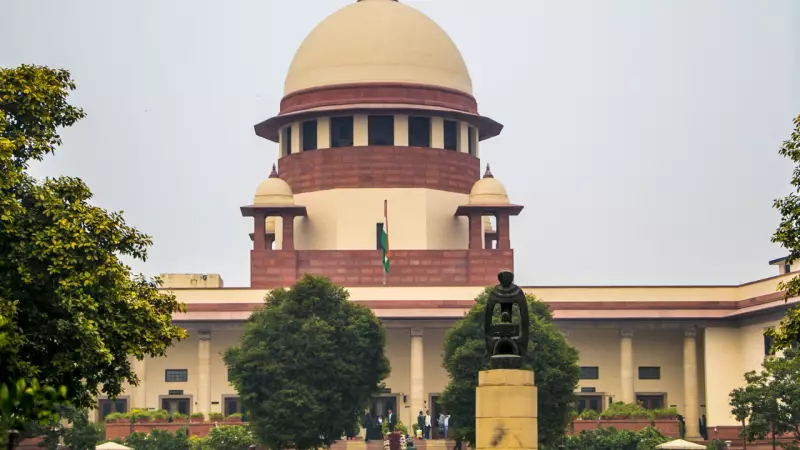
In a powerful affirmation of judicial equality, the Supreme Court of India has made it clear that financial muscle or social influence cannot grant special access to the highest court. Under the leadership of Chief Justice of India Surya Kant, the apex court on Tuesday reinforced the principle of equitable distribution of judicial time, stating that all litigants, regardless of status, must follow the established tiers of the judiciary.
No VIP Route to Justice
The court's firm stance came to the fore when it refused to entertain a petition directly challenging a specific provision of the Prevention of Money Laundering Act (PMLA). The plea was filed by an accused individual seeking to question the validity of Section 44(1)(c) of the PMLA. The bench, visibly unimpressed by the attempt to leapfrog the judicial process, pointedly remarked on the nature of the litigation.
The bench said, “You have started a unique kind of litigation. Because you are rich and influential, you can move SC directly at every stage of trial.” This observation underscored the court's growing concern over a trend where resourceful entities attempt to shortcut the legal journey that ordinary citizens are compelled to undertake.

The Bench's Unequivocal Message
Leaving no room for ambiguity, the Supreme Court bench delivered a message that resonates with the core of a democratic justice system. It explicitly stated that the privileged cannot bypass the structured layers of the justice delivery mechanism to seek a direct audience in the Supreme Court.
“Rich and influential will not be allowed to bypass the tiers of justice delivery system and seek direct audience in SC. They must face trial like ordinary citizens,” the bench asserted while declining to hear the plea. This declaration reinforces the foundational idea that the law and its processes are the same for everyone.
Consolidated Hearing for PMLA Challenges
During the proceedings, the advocate representing the accused, Sidharth Luthra, suggested that the petition could be tagged with other pending pleas that have challenged the validity of the PMLA. Responding to this, CJI Surya Kant acknowledged that several such petitions are indeed awaiting scrutiny.
The CJI indicated that, time permitting, the court plans to hear these connected matters together by the end of this month. However, the bench clarified that for Luthra to join those proceedings, a separate plea was not necessary. The existing mechanism would allow for participation without entertaining a fresh direct appeal.
This ruling serves as a significant judicial precedent, emphasizing procedural integrity and access to justice. It sends a clear deterrent to those who might consider using their stature to gain an unfair advantage in legal battles, ensuring that the journey through the district courts, high courts, and finally the Supreme Court remains a shared path for all litigants.