

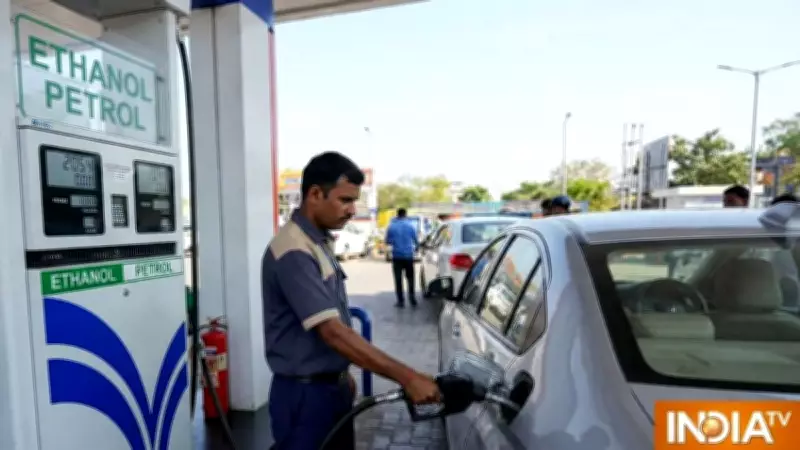
The Supreme Court on Tuesday directed all parties involved in the Bharat Petroleum Corporation Limited (BPCL) ethanol allocation row to maintain the status quo, providing temporary relief amid ongoing legal battles. The Centre clarified that its 20 per cent ethanol blending target for the 2025-26 supply year remains intact, dismissing concerns of policy reversal.
Background of the Dispute
The case stems from a dispute over ethanol supply contracts awarded by BPCL to sugar mills and distilleries. Several aggrieved parties challenged the allocation process, alleging irregularities in the tendering and award of contracts. The Bombay High Court had earlier passed interim orders, which were later appealed in the Supreme Court.
During the hearing, the Centre, represented by the Ministry of Petroleum and Natural Gas, assured the court that the ethanol blending programme (EBP) continues as per the National Policy on Biofuels. “The government’s target of achieving 20 per cent ethanol blending in petrol by 2025-26 remains unchanged,” said Additional Solicitor General (ASG) Aman Lekhi, appearing for the Centre.

Supreme Court’s Directive
A bench comprising Chief Justice D.Y. Chandrachud and Justice P.S. Narasimha passed the status quo order, asking all parties to maintain the existing arrangements until the next hearing. The court also directed the central government to file a detailed affidavit explaining the allocation process and the steps taken to ensure transparency.
The order effectively freezes any new allocations or changes to existing contracts until further notice. “The status quo order means that no new ethanol supply contracts will be signed, and existing ones will continue as they are,” explained a senior advocate present in court.
Impact on Ethanol Blending Programme
India’s ethanol blending programme has gained momentum in recent years, with the government pushing for higher blends to reduce crude oil imports and cut emissions. According to official data, the national average ethanol blending in petrol reached about 12 per cent in the 2023-24 supply year, up from 10 per cent in the previous year.
The target of 20 per cent blending by 2025-26 requires an estimated 1,350 crore litres of ethanol, up from about 500 crore litres in 2023-24. The oil marketing companies (OMCs) have already issued long-term purchase agreements to secure supplies.
Industry experts warn that any prolonged legal uncertainty could derail investment plans. “The ethanol sector relies on clear policy signals. A status quo order, while temporary, may slow down new capacity additions,” said a senior executive from a leading distillery association.
Government’s Assurance
In response to queries, the Ministry of Petroleum and Natural Gas reiterated its commitment to the EBP. “The 20 per cent blending target is not under review. The Supreme Court’s order pertains only to the specific dispute over BPCL’s allocation process and does not affect the overall programme,” a ministry spokesperson stated.
The Centre also highlighted that the EBP has benefited farmers by providing an alternative market for sugarcane and grains, and has reduced carbon emissions by over 40 million tonnes since its inception.
Next Steps
The Supreme Court has scheduled the next hearing for August 2024. Meanwhile, the central government is expected to submit a comprehensive affidavit detailing the allocation methodology. The court may also consider appointing a committee to oversee the process if the dispute persists.
Legal experts believe the status quo order provides a breathing space for all stakeholders to negotiate a settlement. “The court’s intervention underscores the need for a robust and transparent mechanism for ethanol procurement,” said a legal analyst.
The outcome of this case will have significant implications for India’s renewable energy goals and the financial viability of ethanol producers. For now, the status quo ensures that the blending programme continues without disruption, even as the legal process unfolds.






