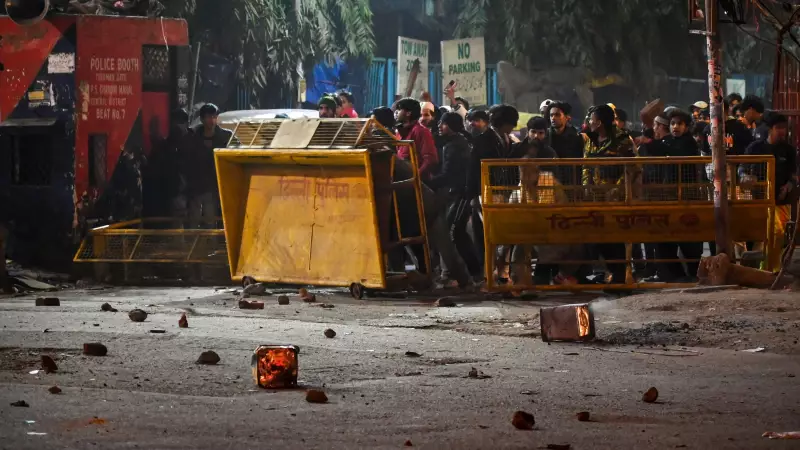
A tense calm enveloped the narrow lanes of Old Delhi on Wednesday, January 8, 2026, following a violent night where an anti-encroachment drive by the Municipal Corporation of Delhi (MCD) spiraled into clashes. The operation, centered around the Faiz-e-Ilahi Mosque in the Turkman Gate area near Ramlila Maidan, saw local residents pelt stones at authorities, who responded by using mild tear gas to disperse the crowds.
Midnight Operation and a Missing Child
According to accounts from residents, the area was plunged into darkness as power was disconnected around 11:30 pm on Tuesday night. The demolition machinery rolled in shortly after, with the drive commencing at 12:12 am on Wednesday. By morning, several lanes were sealed off under heavy police security, restricting movement and heightening anxiety.
The human cost of the chaos was starkly visible in the plight of Sanbari Khatun (30) and her husband Muhammad Shakeel (42). In the afternoon, they were seen frantically running through Haj Manzil lane, clutching their younger son, as they searched for their seven-year-old elder boy. "My son went out at four in the evening on Tuesday and didn't return. That was the last time I saw him," a distraught Khatun told journalists, showing a picture of her missing child.
The family, residents of Haj Manzil lane, suspected he might be hiding in a nearby butcher's shop he frequented. After persistent appeals, police personnel opened the shop's shutter. They found the boy, along with a friend, hiding behind a chopping block, safe but terrified.
Life Disrupted and Structures Razed
The aftermath of the violence was evident on the streets. Nearly a dozen two-wheelers lay overturned in Haj Manzil lane, and most shops remained shuttered through Wednesday. For locals like Atik Ahmed, whose family has lived in Turkman Gate for 150 years, the sudden lockdown created immediate hardships. "We faced problems arranging breakfast for our children. A relative came through other lanes with packets of bread," he said, worried about how long the closures would last. His small handicraft shop in the adjacent area also suffered losses.
Shahzad Khan, a member of the local Aman Committee, provided context on the demolished structures. He stated that a dispensary, razed during the drive, was constructed in the last five years. A banquet hall that was also torn down was about 20 years old. Khan explained that the mosque's managing committee had hired the doctors for the dispensary. A local woman, wishing anonymity, confirmed the facility offered vital services like blood tests and X-Rays, mentioning she had gotten an ankle X-ray there for roughly Rs 350 just a month prior.
Historical Context and Lingering Unease
Atik Ahmed, a regular at the Faiz-e-Ilahi Mosque, reminisced about the area's transformation. "There used to be trees where we played cricket, and a graveyard that wasn't actively used even in our childhood," he recalled. Khan elaborated that as the mosque's congregation grew over time, the dormant graveyard was attached to the premises to accommodate more worshippers.
The administration, including district police, had held several coordination meetings with committees like the Aman Committee beforehand to prevent trouble. Despite these efforts, the operation triggered a violent response, leaving behind a palpable sense of unease. As barricades remained and security forces stood guard, the residents of Old Delhi were left to pick up the pieces, their daily lives and livelihoods abruptly halted by the events of a tense night.