

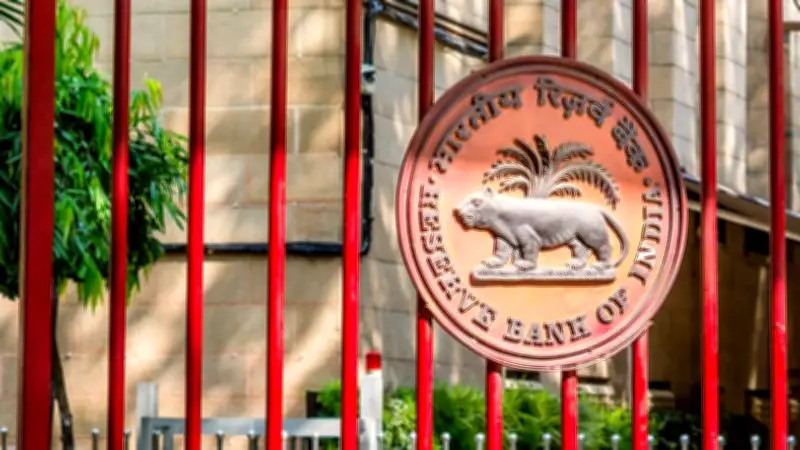
Imagine you are sitting in the Governor's chair at the Reserve Bank of India (RBI). Inflation is rising, businesses are demanding cheaper credit, savers want better returns and the government seeks faster economic growth. Every decision you take can influence millions of households and firms.
The Challenge of Balancing Competing Objectives
As the central bank, the RBI has a primary mandate to maintain price stability while keeping in mind the objective of growth. This balancing act is at the heart of monetary policy. The repo rate, which is the rate at which the RBI lends to commercial banks, is the key tool to influence inflation and growth.
If you raise the repo rate, borrowing becomes costlier, which can cool demand and reduce inflation. But it can also slow down economic growth. Conversely, cutting the rate can spur growth but may fuel inflation. The challenge is to find the right mix.

Interactive Explainer on GS Paper III
This interactive explainer, designed for UPSC aspirants, puts you in the driver's seat. You will face scenarios where you must decide on the repo rate, cash reserve ratio (CRR), and other policy instruments. Each decision has consequences for inflation, growth, and the rupee's value.
The exercise is based on real economic data and models. It helps you understand the trade-offs involved in monetary policy. For instance, if inflation is above the target of 4% (with a band of 2-6%), you may need to tighten policy. But if growth is sluggish, you might want to ease.
Key Learning Outcomes
- Monetary Policy Instruments: Understand how repo rate, reverse repo rate, CRR, and SLR work.
- Inflation Targeting: Learn the framework under which the RBI operates, with a focus on CPI inflation.
- Growth-Inflation Trade-off: Grasp the real-world difficulty of achieving both low inflation and high growth.
- Policy Transmission: See how changes in policy rates affect the economy through banking channels.
Why This Matters for UPSC
GS Paper III includes topics on the Indian economy, planning, and budgeting. Questions often test your understanding of monetary policy and its impact. This interactive exercise not only reinforces concepts but also sharpens your analytical skills.
By playing the role of the RBI Governor, you will appreciate the complexity of decision-making. You will also be better prepared to answer questions on inflation, growth, and the role of the central bank.






