

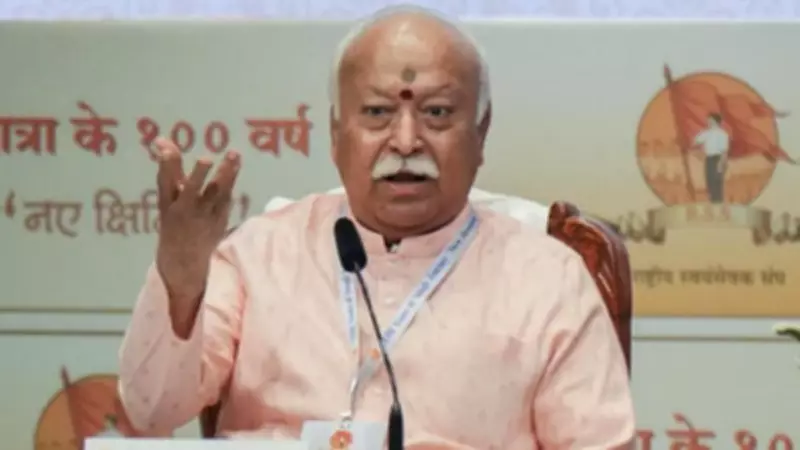
RSS Chief Mohan Bhagwat Calls for Consensus-Based Uniform Civil Code Framework
In a significant statement, Rashtriya Swayamsevak Sangh (RSS) chief Mohan Bhagwat has emphasized that the proposed Uniform Civil Code (UCC) should be framed through broad consensus and must not create societal divisions. His remarks come amid ongoing national debates on implementing a common set of laws governing personal matters like marriage, divorce, inheritance, and adoption across all religious communities in India.
Bhagwat Stresses Unity and Inclusivity in UCC Implementation
Addressing the contentious issue, Bhagwat highlighted that the primary objective of the Uniform Civil Code should be to foster national unity and integration. He argued that any move towards a UCC must involve extensive dialogue and agreement among all stakeholders, including various religious and social groups, to ensure it serves as a unifying force rather than a divisive one.
"The Uniform Civil Code should be developed with consensus and should not lead to divisions in society," Bhagwat stated, underscoring the need for a careful and inclusive approach. He pointed out that India's diverse cultural and religious fabric requires sensitive handling to maintain harmony while pursuing legal reforms.

Support for Bharat Ratna for V D Savarkar to Elevate Award's Prestige
In the same address, Bhagwat also touched upon the long-pending demand for conferring the Bharat Ratna, India's highest civilian award, on Hindutva ideologue Vinayak Damodar Savarkar. He asserted that awarding Savarkar would significantly enhance the prestige and value of the Bharat Ratna itself.
"The award's prestige will rise if conferred on him," Bhagwat remarked, referring to Savarkar's contributions to India's freedom struggle and his ideological influence. Savarkar, a key figure in the Hindu nationalist movement, has been a polarizing figure in Indian history, with debates over his legacy continuing to this day.
Bhagwat's endorsement adds momentum to the campaign by various groups advocating for Savarkar's recognition with the Bharat Ratna. He argued that honoring such historical figures acknowledges their role in shaping the nation's identity and values.
Broader Implications for National Discourse
Bhagwat's statements are likely to influence the ongoing political and social discussions around the Uniform Civil Code and national honors. As a prominent leader of the RSS, his views carry weight in shaping public opinion and policy directions.
The call for consensus on the UCC aligns with broader efforts to address legal uniformity without alienating minority communities. Meanwhile, the push for Savarkar's Bharat Ratna reflects deeper ideological currents in contemporary Indian politics, highlighting the interplay between history, recognition, and national pride.
These developments underscore the complex dynamics at play as India navigates issues of law, identity, and historical memory in the public sphere.






