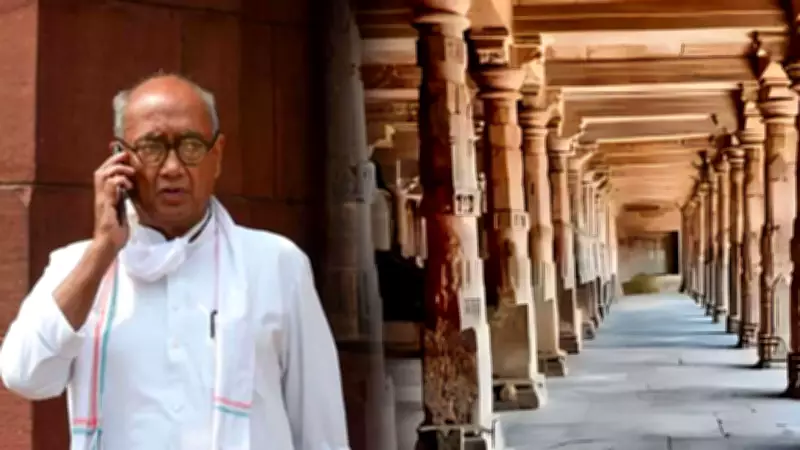
The Bhojshala-Kamal Maula dispute in Madhya Pradesh has reignited political and religious tensions after Congress MP Digvijaya Singh criticized the Madhya Pradesh High Court's recent ruling. Singh described the verdict as vague and asserted that a monument protected by the Archaeological Survey of India (ASI) cannot legally function as a place of worship.
Digvijaya Singh's Objections
Singh emphasized that the ASI's own report found no evidence of a temple at the site. He argued that the High Court's decision to allow worship at Bhojshala contradicts established legal principles governing ASI-protected monuments. The Congress leader also highlighted that the 2003 ASI order, which permitted Friday Namaz at the complex, was partially struck down by the court.
High Court Verdict Details
The Madhya Pradesh High Court ruled that Bhojshala retains the religious character of a temple dedicated to Goddess Saraswati. The court partially invalidated the 2003 ASI order that allowed Muslims to offer Friday prayers at the site. This verdict has sparked mixed reactions, with Hindu groups welcoming it and Muslim organizations expressing disappointment.

Political and Religious Implications
The dispute is not merely a legal matter but also a politically sensitive issue in Madhya Pradesh, a state with a significant Hindu and Muslim population. Singh's remarks have added fuel to the ongoing debate, with critics accusing him of politicizing the issue. Meanwhile, supporters argue that the High Court's verdict lacks clarity and fails to address historical evidence.
Background of the Dispute
Bhojshala, built by Raja Bhoj in the 11th century, is believed to have been a temple dedicated to Goddess Saraswati. It was later converted into a mosque by the Delhi Sultanate. The site is currently under ASI protection, and the dispute centers on whether it should be used exclusively as a temple or continue to allow Muslim prayers.
The ASI's 2003 order allowed Muslims to offer Namaz on Fridays, but the High Court has now restricted that practice. The issue remains contentious, with both communities claiming historical and religious rights over the site.