Bihar's Political Landscape Transforms as Nitish Kumar Exits Chief Ministerial Role
NEW DELHI: For over three decades, Bihar's political arena has been dominated by the disciples of Jayaprakash Narayan—specifically Nitish Kumar and Lalu Yadav. With Lalu Yadav stepping back from active politics and Nitish Kumar now opting for a Rajya Sabha seat instead of retaining the state's top executive position, Bihar is poised to enter an unprecedented and uncertain phase. A new face is expected to assume the chief ministerial responsibilities, marking a significant departure from the established political order.
Nitish Kumar's Rajya Sabha Nomination and Political Legacy
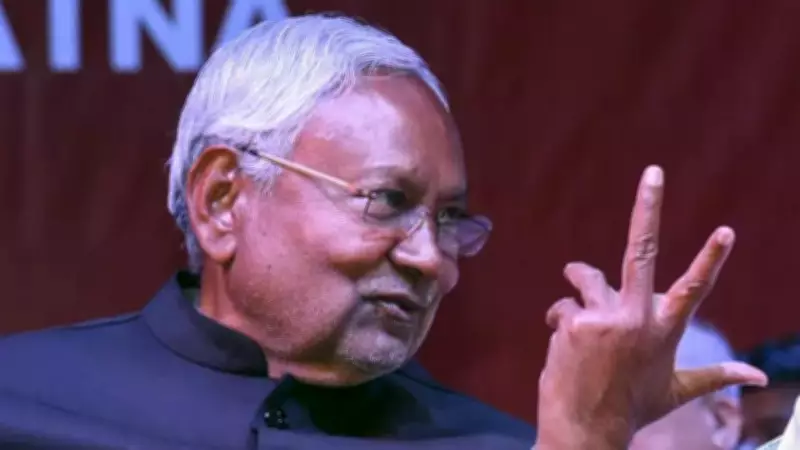
Following a commanding performance in the recent Bihar assembly elections, Nitish Kumar formally filed his nomination for the Rajya Sabha on Thursday. The 75-year-old politician took to social media platform X to convey his intentions, stating, "I seek to become a member of the Rajya Sabha in the elections being held this time. I want to assure you with complete honesty that my relationship with you will continue in the future as well, and my resolve to work together with you to build a developed Bihar will remain steadfast. The new government that will be formed will have my full cooperation and guidance."
Although many political observers anticipated this move amid speculation about his declining health, Nitish Kumar's sudden announcement still caught numerous stakeholders by surprise. They had expected a more structured and gradual transition plan. In the coming days, Nitish Kumar is projected to win the Rajya Sabha election unopposed, subsequently resigning from the chief ministerial post. This decision by the Janata Dal (United) chief not only concludes the political lineage of JP Narayan, Ram Manohar Lohia, and Karpoori Thakur in Bihar but also propels his party into uncharted territory with no clear strategic roadmap for the future.

The Succession Dilemma Within JD(U)
Nitish Kumar has long been the "Peer-Bawarchi-Bhisti-Khar" for his party, a multifaceted leader handling diverse roles. Despite never securing an outright majority in the state assembly, his "Sushasan Babu" image—emphasizing good governance—enabled the JD(U) to maintain a dominant position in Bihar politics for more than two decades. However, the party failed to cultivate a robust second line of leadership beyond Nitish Kumar. Figures like Sanjay Jha, Lalan Singh, and Vijay Choudhary exist within the party hierarchy, but none possess a mass connection with the JD(U)'s core vote base.
Furthermore, Nitish Kumar has consistently opposed dynastic politics throughout his extensive career. Unlike Lalu Yadav, who positioned his son Tejashwi Yadav as his political heir, Nitish Kumar never permitted his family members to enter the political arena. His son Nishant has remained detached from politics. Amid these unfolding developments, speculation is intensifying that Nishant Kumar might make a political debut, with the party viewing him as a potential bridge to its core supporters.
Senior JD(U) leader Shrawan Kumar informed news agency PTI, "Now, it's clear, and it has been finalised that Nishant Kumar will join active politics. The party will make a formal announcement in a day or two. Party workers have been demanding Nishant's entry into politics for several years. Now party workers and supporters are upbeat with the decision ahead of Holi." Conversely, Nitish Kumar's brother-in-law Anil Kumar accused Sanjay Jha and Lallan Singh of orchestrating a conspiracy against the JD(U), alleging their involvement in the current turmoil.

Political Analyst Insights and Future Projections
In a conversation with The Times of India, political analyst Kumar Vijay expressed concerns about JD(U)'s prospects following Nitish Kumar's departure from the center stage of Bihar politics. He remarked, "Nitish Kumar’s exit in this manner is not a natural political transition. If it had been a natural process, it would have been different. Everyone says Nitish Kumar’s health is not good, but the way events unfolded has surprised many. From what it appears, the future of JD(U) looks quite difficult. People say that Nishant may take over, but he has no political experience. Also, the people around him are not very open yet, but there seems to be something happening internally that is preventing Nitish Kumar from speaking openly."
Vijay added, "At the same time, the role of leaders like Sanjay Jha, Lalan Singh, Vijay Choudhary and Ashok Choudhary looks suspicious. In a way, they have deserted Nitish Kumar, and there may be no one left capable of holding JD(U) together. At the worker level, protests have already begun. Hardcore JD(U) workers believe this is BJP’s handling of the situation."
Potential Merger with BJP and Electoral Dynamics
Kumar Vijay also suggested the possibility of JD(U) merging with its ally, the Bharatiya Janata Party (BJP), in the near future, though such a move might face resistance within the party. He explained, "There is also a possibility that BJP and JD(U) may merge in the future, though not everyone in JD(U) will accept such a merger. Several leaders may resist it. Some leaders within the party may move to RJD, while others may join BJP." He noted that previously, JD(U) workers supported BJP candidates under the belief that Nitish Kumar would remain chief minister, but now many hardcore workers might refuse to back the BJP.
Nitish Kumar's decision to transition to the Rajya Sabha comes merely five months after the BJP emerged as the senior partner in the alliance. In the 2025 assembly elections, the BJP became the single largest party, securing 89 seats with a vote share of 20.45%, while JD(U) obtained 85 seats with 19.61% of the votes. Following this decisive victory, the BJP appeared less as a coalition partner and more as a challenger maneuvering to assume control. It secured a larger share in the cabinet of ministers, and Nitish Kumar had to relinquish the home portfolio. Notably, Bihar remains the only Hindi heartland state where the BJP has not held the top executive office thus far.
Impact on EBC Vote Bank and Leadership Crisis
Over the years, Nitish Kumar strategically positioned himself as the "poster boy" of the Extremely Backward Class (EBC), which constitutes the largest demographic segment in Bihar. The JD(U) chief consciously built his support base around the entire EBC community by aligning his politics with Karpoori Thakur's ideals and focusing on economically weaker sections. With his exit, questions arise regarding which political entity will benefit from the EBC vote bank.
According to Kumar Vijay, no party in Bihar currently seems poised to inherit the non-Yadav OBC and EBC vote banks. He stated, "If Tejashwi Yadav had strong leadership credentials, that vote bank could have shifted to RJD. But the biggest tragedy in Bihar today is the lack of strong political leadership. Congress doesn’t have it, RJD doesn’t have it either. Despite being a politically mature state, Bihar is facing a serious leadership crisis." He further commented that figures like Upendra Kushwaha have lost credibility, Tejashwi Yadav has not emerged as a grassroots leader, and the LJP has become more of a dramatic political outfit.
Conclusion: A New Chapter for Bihar
For Bihar, Nitish Kumar's move to the Rajya Sabha signifies the conclusion of a prolonged political era characterized by his leadership, frequent alliance shifts, and his governance model. The coming days will reveal who will succeed him as chief minister. However, the subsequent months will critically determine how his party and the state's political dynamics evolve in his absence, shaping Bihar's future trajectory in unprecedented ways.