BJP national president Nitin Nabin on Saturday launched his maiden three-day visit to Punjab from Amritsar, signaling the party's intent to bolster its organizational network and energize the cadre in preparation for the 2027 assembly elections, which the BJP plans to contest independently.
Core Committee Meeting and Organizational Review
Upon arrival in Amritsar, Nabin, accompanied by Punjab BJP president Kewal Singh Dhillon and BJP national general secretary Tarun Chugh, chaired a meeting of the party's state core committee. The discussions focused on the current political scenario and organizational preparedness, with an emphasis on strengthening the party down to the booth level and finalizing upcoming programs.
"Today, I participated in the state core committee meeting and held extensive discussions on strengthening the organisation down to the booth level, upcoming programmes and the current situation in the state," Nabin said.

Religious Visits and Public Engagement
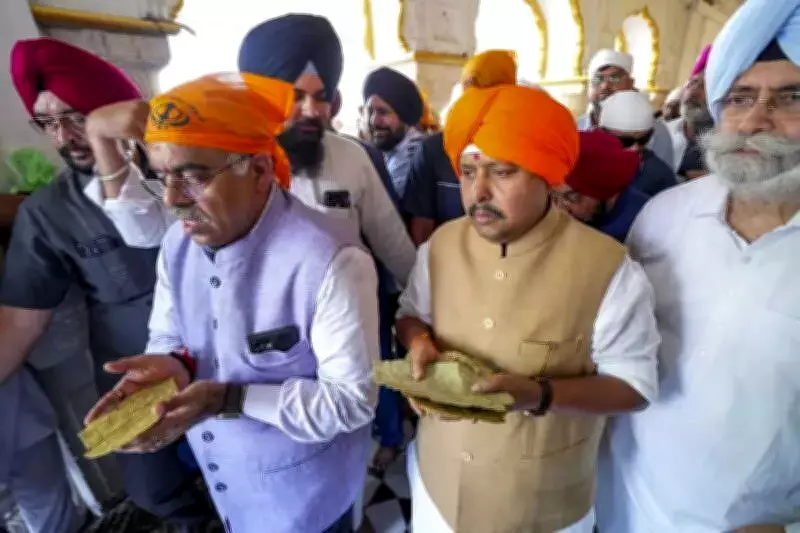
Later, wearing a saffron turban, Nabin paid obeisance at the Golden Temple and performed sewa by washing utensils. He also visited Jallianwala Bagh. Addressing reporters, Nabin said he prayed for peace, harmony, and prosperity for Punjab and the country.
Invoking the legacy of Maharaja Ranjit Singh, Nabin noted that the Sikh ruler had given Punjab a distinct identity and stature nationally and globally. "I prayed that the way the country is progressing under Prime Minister Narendra Modi's leadership, the rays of development also reach every home, neighbourhood and village in Punjab," he said.
Strategic Context and Upcoming Events
Nabin's visit comes weeks after the BJP appointed Kewal Singh Dhillon, the party's first Jat Sikh state president in Punjab, a move seen as part of its strategy to broaden its social base ahead of the assembly polls. During his three-day stay, Nabin will attend religious, social, and organizational programs in Amritsar, Jalandhar, and Ludhiana, including International Yoga Day celebrations at Lovely Professional University and meetings with industrialists, youth representatives, and party office-bearers.