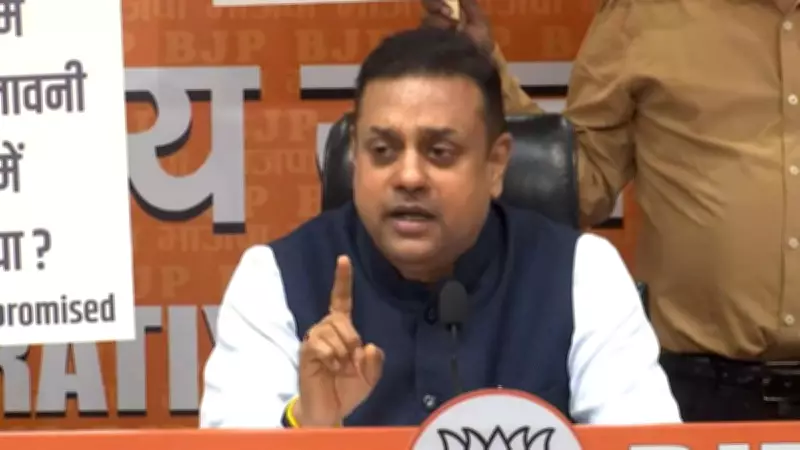
BJP Intensifies Attack on Congress Over AI Summit Dispute, Targets Nehru's Legacy
The Bharatiya Janata Party (BJP) has escalated its political offensive against the Congress, launching a scathing critique that extends to India's first Prime Minister, Jawaharlal Nehru. In a recent development, BJP leaders have accused Nehru of consistently compromising India's national interests and behaving as if he were a British agent during his tenure. This accusation comes amidst a heated controversy surrounding an artificial intelligence (AI) summit, which has sparked a bitter political row between the two major parties.
Allegations of Historical Compromise and Contemporary Conflict
According to BJP spokespersons, Nehru's policies and actions were allegedly marked by a tendency to prioritize British or Western interests over those of India. They claim that this historical pattern of compromise has had long-lasting effects on the nation's development and sovereignty. The party has used this narrative to lambast the Congress, suggesting that the current leadership continues to exhibit similar tendencies, particularly in the context of the ongoing AI summit dispute.
The AI summit, which focuses on advancements and collaborations in artificial intelligence, has become a flashpoint in Indian politics. The BJP alleges that the Congress is attempting to undermine India's position and interests at the summit, drawing parallels to what they describe as Nehru's subservient attitude. This has led to a fierce exchange of words, with both parties trading accusations and defending their stances vigorously.

Political Implications and Public Discourse
The controversy has significant implications for India's political landscape, as it touches upon sensitive issues of national pride, historical interpretation, and technological sovereignty. By invoking Nehru's legacy, the BJP aims to frame the Congress as a party that has historically failed to protect India's interests, thereby questioning its credibility in contemporary governance matters, including technology policy.
Public discourse has been ignited by these allegations, with historians, political analysts, and citizens engaging in debates over Nehru's contributions versus the BJP's criticisms. Some argue that such attacks are politically motivated and distort historical facts, while others see them as a necessary reevaluation of past leadership. The AI summit row has thus become intertwined with broader narratives about India's post-independence history and its future direction in the global tech arena.
Congress Response and Defense of Nehru
In response, the Congress has vehemently defended Nehru's legacy, highlighting his role in shaping modern India and his efforts to establish a sovereign, democratic nation. Party leaders have dismissed the BJP's accusations as baseless and politically driven, aimed at diverting attention from more pressing issues. They argue that the AI summit should be approached with a focus on collaboration and innovation, rather than being politicized for electoral gains.
The Congress has also pointed out that Nehru's policies, such as his emphasis on scientific temper and industrialization, laid the foundation for India's progress in fields like technology. They accuse the BJP of engaging in historical revisionism to suit their political agenda, thereby undermining national unity and progress.
Looking Ahead: Impact on AI Summit and Political Dynamics
As the dispute rages on, the immediate impact on the AI summit remains uncertain. There are concerns that the political friction could affect India's participation and outcomes at the event, potentially hindering opportunities for technological advancement and international cooperation. Both parties are likely to continue leveraging this issue in their campaigns, especially with upcoming elections in mind.
This episode underscores the deep-seated ideological divides in Indian politics, where historical figures and events are often reinterpreted to serve contemporary political battles. The BJP's targeting of Nehru in the context of the AI summit row reflects a broader strategy to challenge the Congress's historical narrative and position itself as the true guardian of India's interests.

In conclusion, the BJP's lambasting of the Congress over the AI summit controversy, coupled with its criticism of Nehru, has added a new dimension to India's political discourse. It highlights the ongoing tensions between preserving historical legacies and navigating modern challenges, with significant stakes for the country's technological future and democratic ethos.