

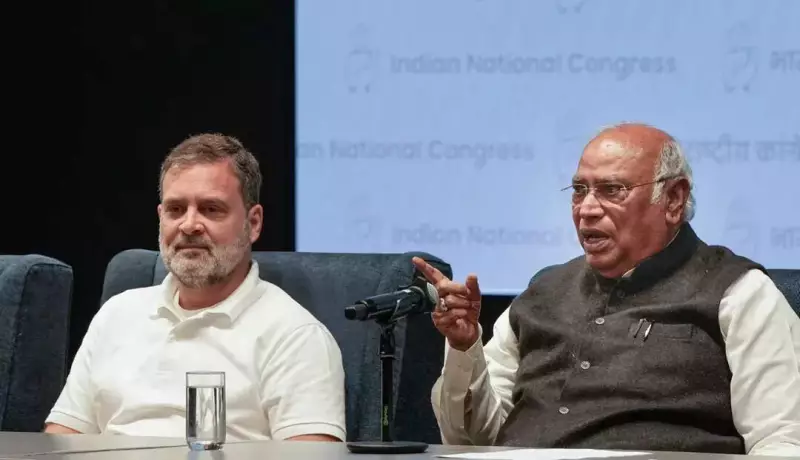
The Indian National Congress has declared a massive nationwide agitation against the central government's decision to replace the landmark Mahatma Gandhi National Rural Employment Guarantee Act (MGNREGA). The party will launch the 'MGNREGA Bachao Abhiyan' (Save MGNREGA Campaign) starting January 5, making the protection of the employment scheme the core of a pan-India movement.
An 'Insult' to Gandhi and a Constitutional Right
Congress President Mallikarjun Kharge strongly condemned the move, labeling the replacement of MGNREGA with the Viksit Bharat–Guarantee for Rozgar and Ajeevika Mission (Gramin) or VB G-RAM-G law as an insult to Mahatma Gandhi. He emphasized that MGNREGA is not just a welfare scheme but a constitutional right to work for the rural poor. Kharge pledged the party's full resistance against any attempt to erase Gandhiji's name from the legislation that has been a lifeline for millions.
Opposition Rallies Against 'One-Man Governance'
Leader of Opposition in the Lok Sabha, Rahul Gandhi, launched a sharp critique of the government's process. He alleged that Prime Minister Narendra Modi took the decision to enact the VB G-RAM-G law without consulting his own ministers or the Union Cabinet, calling it a sign of 'one-man governance'. Gandhi vowed to fight against this replacement and claimed that the entire opposition would unite against this step.

The new law, which has already received President Droupadi Murmu's assent, guarantees 125 days of wage employment per year to rural households willing to do unskilled manual work. However, it introduces a significant structural change: while MGNREGA was a fully Central government-funded scheme, the VB G-RAM-G law mandates a 60:40 funding split between the Centre and the states.
Core Controversies and the Road Ahead
The Congress and other opposition parties have leveled two primary criticisms against the new legislation. Firstly, they object to the removal of Mahatma Gandhi's name. Secondly, they argue that by altering the funding mechanism and framework, the government is diluting a rights-based entitlement and undermining the legal guarantee of work.
With the announcement of protests commencing on January 5, the stage is set for a major political confrontation. The Congress aims to mobilize public opinion around the MGNREGA scheme, which it introduced during the UPA era, positioning the upcoming movement as a battle to protect the rights and dignity of rural workers.






