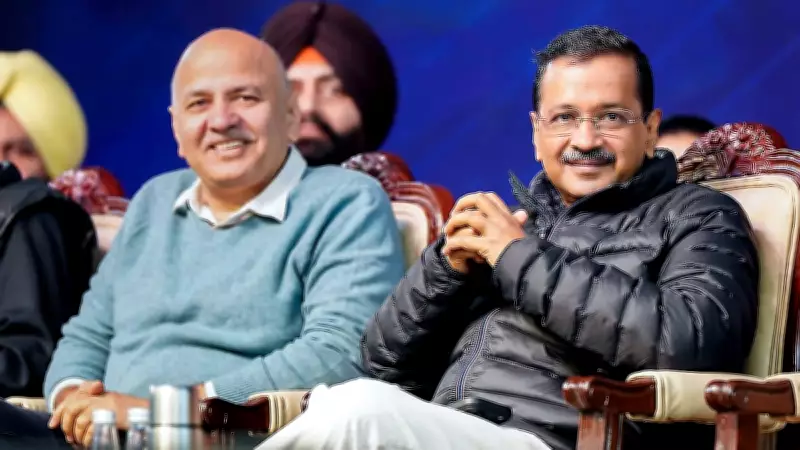
Delhi Court Acquits All Accused in Liquor Policy Case, Rejects CBI Chargesheet
In a significant legal development, a Delhi court has acquitted all 23 individuals accused in the high-profile Delhi liquor policy case, including prominent political figures Arvind Kejriwal and Manish Sisodia. The court delivered its verdict on February 27, 2026, after a thorough examination of the evidence presented by the Central Bureau of Investigation (CBI).
Court Cites Lacunae in CBI's Case
The court's decision to acquit all accused was based on its observation of several critical lacunae or gaps in the CBI's charge sheet. According to the judgment, these deficiencies could not be adequately addressed or filled, even with the reliance on statements provided by an approver. The court emphasized that the prosecution failed to establish a concrete and legally sound case against the defendants.
This ruling marks a major setback for the CBI, which had been investigating the alleged irregularities in the Delhi government's liquor policy. The case had garnered widespread attention due to the involvement of key political leaders and the implications for governance in the national capital.

Details of the Acquittal
The acquittal covers all 23 accused, with the court noting that the evidence presented was insufficient to prove guilt beyond a reasonable doubt. Key aspects of the judgment include:
- Rejection of Chargesheet: The court formally rejected the CBI's charge sheet, highlighting its inadequacies in linking the accused to any criminal wrongdoing.
- Approver Statements Insufficient: Statements from an approver, intended to bolster the prosecution's case, were deemed unreliable and insufficient to overcome the identified gaps.
- Legal Precedent: The judgment reinforces the principle that accusations must be backed by solid evidence, and mere allegations cannot sustain a conviction.
Political and Legal Implications
This acquittal is expected to have far-reaching consequences in both political and legal spheres. For Arvind Kejriwal and Manish Sisodia, it provides a legal vindication amid ongoing political controversies. The ruling may also prompt scrutiny of investigative agencies' methodologies and the robustness of their cases in high-stakes political matters.
Legal experts suggest that the court's emphasis on procedural integrity and evidentiary standards could influence future cases involving similar charges. The decision underscores the judiciary's role in upholding justice, even in politically charged environments.
As the news spreads, reactions from various stakeholders, including political parties and civil society, are anticipated. The case has been a focal point in discussions about transparency and accountability in public policy implementation.