

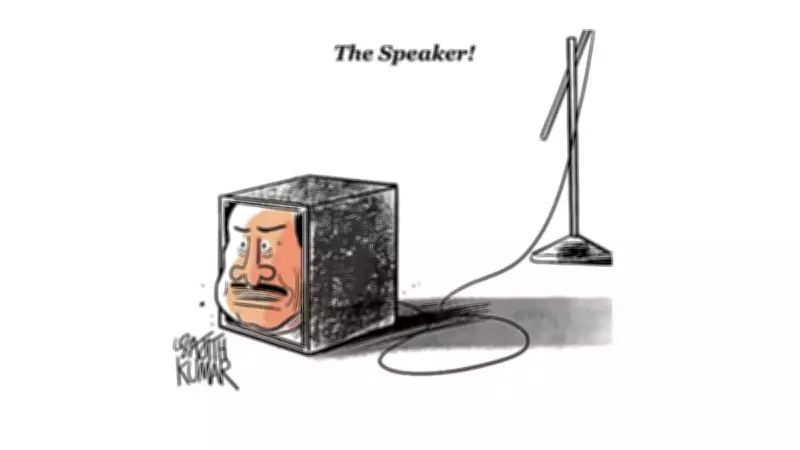
Deccan Herald Editorial Cartoon Critiques Lok Sabha Speaker's Parliamentary Conduct
A recent editorial cartoon published by Deccan Herald has ignited significant public and political discourse by offering a sharp, satirical critique of the Lok Sabha Speaker's role in managing parliamentary proceedings. The cartoon, which appeared in the newspaper's opinion section, uses visual metaphor and humor to comment on perceived issues of decorum, opposition participation, and procedural fairness within India's legislative body.
Satirical Depiction Highlights Parliamentary Tensions
The cartoon artistically portrays the Speaker in a symbolic setting, often interpreted as struggling to maintain order or balance amidst chaotic debates. It subtly references recent incidents where opposition members have alleged bias or suppression of their voices during sessions. By exaggerating certain aspects of parliamentary dynamics, the cartoon aims to provoke thought on whether the Speaker's actions align with constitutional duties to ensure impartiality and uphold democratic norms.
This visual commentary comes at a time when parliamentary sessions have been marked by frequent disruptions, adjournments, and heated exchanges between ruling and opposition parties. The cartoon's release has resonated with critics who argue that the Speaker's interventions sometimes favor the government, thereby undermining the principle of equal representation.

Public and Political Reactions to the Cartoon
Reactions to the Deccan Herald cartoon have been mixed, reflecting broader political divides. Supporters of the opposition have praised it as a bold and necessary critique, emphasizing the need for transparency and accountability in parliamentary conduct. They view it as a reminder of the Speaker's responsibility to facilitate constructive debate rather than stifle dissent.
Conversely, proponents of the ruling party have dismissed the cartoon as biased and misleading, asserting that the Speaker has acted within procedural bounds to ensure smooth functioning of the House. They argue that such satirical portrayals oversimplify complex parliamentary challenges and detract from substantive policy discussions.
Media analysts note that editorial cartoons like this one play a crucial role in democratic societies by using satire to highlight governance issues, often reaching a wider audience than traditional news reports. The Deccan Herald piece has sparked conversations on social media and in public forums, underscoring the power of visual journalism in shaping political discourse.
Broader Implications for Parliamentary Democracy
The controversy surrounding this cartoon raises important questions about the state of parliamentary democracy in India. Key concerns include:
- Impartiality of the Speaker: Whether the position maintains neutrality in disputes between government and opposition.
- Freedom of Expression: How satirical media can critique institutions without facing backlash.
- Parliamentary Efficiency: The impact of procedural disputes on legislative productivity and public trust.
Experts suggest that while cartoons are a form of protected speech under freedom of the press, they also carry the risk of polarizing opinions. The Deccan Herald cartoon serves as a case study in how media can influence perceptions of political authority and institutional integrity.
In conclusion, the Deccan Herald editorial cartoon on the Lok Sabha Speaker has become a focal point for debates on parliamentary conduct and media's role in democracy. By blending humor with critique, it encourages citizens to reflect on the health of India's legislative processes and the accountability of its leaders.






