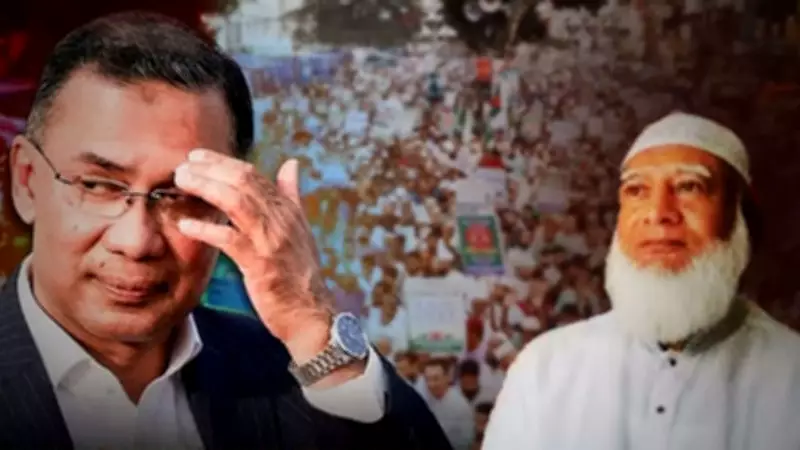
Political Turmoil in Dhaka as Tarique Rahman Assumes Role of Bangladesh Prime Minister
Bangladesh has plunged into a state of heightened political chaos and widespread public demonstrations following the official inauguration of Tarique Rahman as the nation's new Prime Minister. The swearing-in ceremony, which took place outdoors at the parliament grounds in Dhaka, deviated sharply from established traditions, sparking immediate and vocal opposition from various political factions.
Unprecedented Ceremony Sparks Immediate Backlash
The decision to hold the oath-taking ceremony in an open-air setting at the parliament complex represented a significant departure from conventional protocols. This unconventional approach quickly became a flashpoint for discontent, particularly among supporters of Jamaat and its allied groups. Opposition parties organized coordinated rallies across Dhaka, with participants expressing vehement anger over what they perceive as procedural irregularities.
The core of the protestors' grievances centers on the BNP's refusal to incorporate an additional pledge under the proposed Constitution Reform Council framework. This specific point of contention has amplified existing political tensions, creating a volatile atmosphere in the capital city.

Electoral Dominance Amidst Growing Unrest
Despite the turbulent backdrop of protests and public dissent, the political landscape reveals a clear electoral mandate. The BNP-led alliance secured a commanding majority in the recent parliamentary elections, winning over 200 of the 297 contested seats. This decisive victory has solidified the BNP's political dominance and provided the foundation for Rahman's ascension to power.
Interestingly, members-elect from Jamaat had already completed their oath-taking ceremonies prior to the main event, adding another layer of complexity to the unfolding political drama. This sequential approach to swearing-in ceremonies has further highlighted the deep divisions within Bangladesh's political sphere.
A Nation at a Political Crossroads
The events surrounding Rahman's inauguration underscore several critical aspects of Bangladesh's current political reality:
- Deepening Political Polarization: The stark contrast between the BNP's electoral success and the vehement opposition protests reveals a nation divided along political lines.
- Public Unrest and Volatility: The spontaneous demonstrations and organized rallies indicate significant public dissatisfaction with the political transition process.
- Constitutional Controversies: The debate surrounding the Constitution Reform Council pledge has emerged as a central point of political contention.
- Traditional Norms Under Challenge: The break from ceremonial traditions signals potential shifts in how political power is ceremonially transferred and perceived.
As Bangladesh enters this new chapter under Rahman's leadership, the combination of electoral dominance and widespread protests creates a complex governance environment. The nation finds itself navigating between democratic mandates and public dissent, with the capital city of Dhaka serving as the primary stage for this political drama. The coming weeks will likely determine whether this unrest represents temporary growing pains or the beginning of more sustained political conflict.