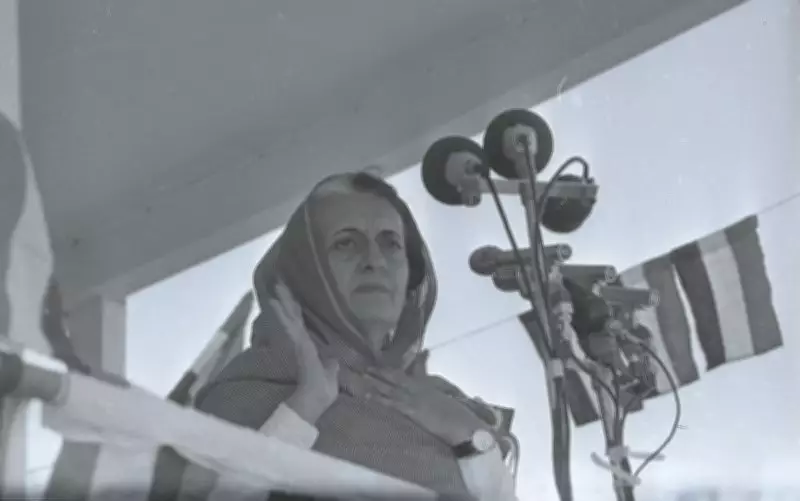
Senior journalist Ajay Setia has alleged that former Prime Minister Indira Gandhi imposed the 1975 Emergency on the basis of “misleading and false claims” presented to the President. He claimed these included allegations that the JP movement threatened internal security and that Jayaprakash Narayan had urged the Army to disobey government orders.
Setia made the remarks at the launch of his new book, Aapatkal: Andolan aur Vishwasghat ki Antarkatha (Emergency: The Inside Story of the Movement and Betrayal), at an event organised by Pragya Pravah and Jigyasa at the Indira Gandhi National Centre for the Arts (IGNCA).
Event attendance and imprisonment accounts
The event was attended by several speakers, including IGNCA Chairman and veteran journalist Ram Bahadur Rai, former RSS ideologue K N Govindacharya and former ABVP leader Raj Kumar Bhatia. They shared their views on the Emergency period. Many participants, including the author and several speakers, had also been imprisoned during the Emergency.

Allegations of pre-planned decision
Setia claimed that references in the Shah Commission proceedings indicated that key decisions on imposing the Emergency had been taken even before Jayaprakash Narayan’s speech on June 25, 1975. He further alleged that the Emergency proclamation was signed at the Prime Minister’s residence late that night and that the President was presented with a pre-drafted order for approval.
He also argued that internal political differences within the Congress leadership, including disagreements over constitutional restructuring, influenced the decisions taken during that period.
Rai’s perspective on the Emergency
Speaking at the event, Rai said the Emergency was not imposed because of concerns over internal security. Instead, he linked it to the Allahabad High Court verdict that had set aside Indira Gandhi’s election. He added that subsequent legal and political developments, including Supreme Court proceedings and constitutional amendments, formed the backdrop to the proclamation.
Rai further said that mass movements led by Jayaprakash Narayan united diverse political and ideological groups against the government of the day. He added that the RSS and allied organisations operated underground after the ban imposed in July 1975.
Bhatia’s call for democratic reflection
Bhatia said the Emergency should be studied as a defining chapter in India’s democratic history. He emphasised the need to strengthen democratic institutions, protect civil liberties and safeguard constitutional values.
Book content and historical significance
The book also documents underground political activities, protest networks and public mobilisation during the Emergency. It includes accounts of resistance movements and coordination among opposition groups across the country. The Emergency, imposed on June 25, 1975, remains one of the most controversial chapters in India’s political history. It was marked by the suspension of civil liberties, the arrest of opposition leaders and extensive constitutional amendments.