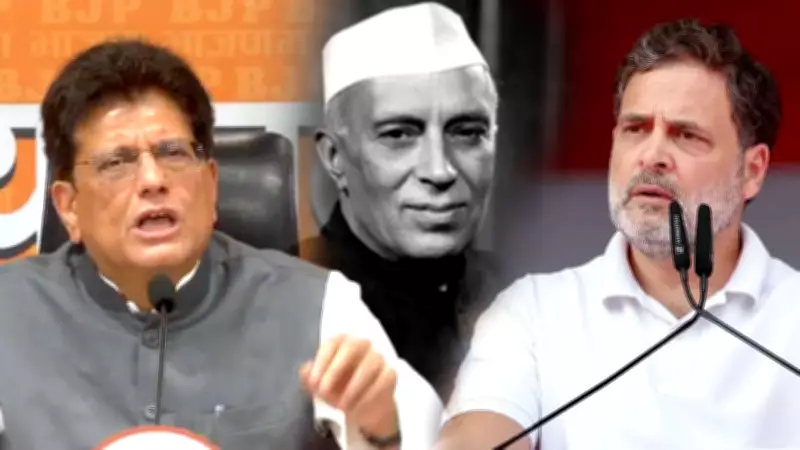
Piyush Goyal Launches Scathing Attack on Congress Leadership
In a high-decibel political confrontation that has intensified the ongoing rivalry between India's major political parties, Union Minister Piyush Goyal launched a sharp and personal attack on the Congress party and its leadership. Addressing the media in New Delhi, Goyal made explosive allegations that have pushed political discourse into deeply confrontational territory.
"Rahul Gandhi Acts as a Puppet"
Piyush Goyal did not mince words when he described Congress leader Rahul Gandhi as acting "as a puppet" in political matters. The senior BJP leader went further to allege that the entire Gandhi family has been politically "compromised" on multiple occasions, putting what he termed as "national interest at repeated risk."
Goyal's remarks represent one of the most direct personal attacks in recent months, coming at a time when political temperatures are already elevated ahead of upcoming electoral contests and major policy debates. The Union Minister cited what he described as past controversies and governance decisions to build his case that compromise has been a defining characteristic of the Congress party's historical approach to governance.

Congress Party's History Under Scrutiny
The BJP leader framed his criticism within a broader narrative about competing visions of nationalism and accountability in Indian politics. According to Goyal, the Congress party has consistently demonstrated a pattern of behavior that prioritizes political expediency over what he considers to be the nation's best interests.
This exchange highlights how India's political discourse has become increasingly polarized, with both major parties frequently engaging in sharp rhetorical battles that often focus on questioning each other's commitment to national priorities. The Congress party has historically countered such allegations by describing them as politically motivated attacks designed to distract from substantive policy discussions.
Broader Political Strategy at Play
Political analysts suggest that statements like those made by Piyush Goyal reflect a broader strategic approach to framing political contests as battles between fundamentally different approaches to governance and national interest. With elections on the horizon and significant policy debates about trade, economy, and international relations taking center stage, such exchanges tend to amplify existing partisan divides.
The timing of these remarks is particularly significant as they come amidst ongoing discussions about trade policies and international agreements that have become flashpoints in political debates. The reference to "compromise" in national interest appears designed to resonate with ongoing discussions about how India should position itself in complex international trade negotiations and diplomatic relationships.
Escalating Political Confrontation
This episode marks another escalation in what has become an increasingly confrontational political environment. The personal nature of the attack on Rahul Gandhi and the Gandhi family suggests that political battles are moving beyond policy disagreements into more personal and legacy-oriented territory.
As India prepares for upcoming electoral contests and policy decisions that will shape the country's future direction, exchanges like this one between Piyush Goyal and the Congress party underscore how deeply divided the political landscape has become. The framing of political competition as a choice between competing visions of nationalism and accountability appears set to dominate political discourse in the coming months.