

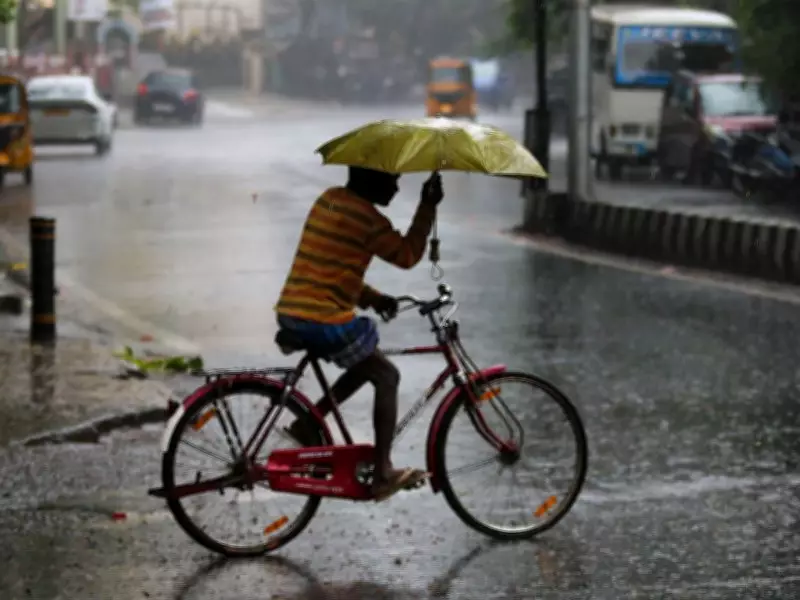
The India Meteorological Department (IMD) has forecast below-normal monthly average rainfall over the country in July 2026. Weather conditions are favorable for the further advance of the southwest monsoon into remaining parts of Uttarakhand, Himachal Pradesh, Ladakh, Uttar Pradesh, Daman & Diu, Jammu & Kashmir, and most parts of Haryana, Chandigarh, Delhi, Punjab, and some parts of Rajasthan over the next 2-3 days, the IMD stated.
IMD July Rainfall Forecast
The long-period average of rainfall over India as a whole during July, based on data from 1971-2020, is about 280.4 mm. The IMD expects good rainfall activity over East Central India, including the eastern part of Vidarbha, Marathwada, Telangana, Andhra Pradesh, Tamil Nadu, and Odisha. Some parts of northeastern states like Sikkim, Arunachal Pradesh, parts of Manipur and Mizoram, and some parts of Jammu & Kashmir and Himachal Pradesh will also receive rainfall, according to DG M Mohapatra.
Temperature Outlook
In July 2026, maximum temperatures are expected to remain above normal across most parts of India, except a few isolated areas in West-Central India where normal to below-normal maximum temperatures are likely. Minimum temperatures are also expected to be above normal over most regions, except some isolated pockets of Central and North-East India where normal minimum temperatures are likely.

ENSO Conditions
Weak El Niño–Southern Oscillation (ENSO) conditions are currently prevailing over the equatorial Pacific Ocean. A weak ENSO phase typically corresponds to a subdued or slightly below-normal monsoon, the IMD noted.
June Rainfall Deficit
Against a normal of 165.3 mm of rainfall in June, India received 99.5 mm, recording a deficit of 39.8%. The core monsoon zone encompassing states such as Madhya Pradesh, Chhattisgarh, parts of Maharashtra, Odisha, and the Indo-Gangetic plain received below-normal rainfall on most days in June.
Historical Perspective
A deficient June does not necessarily lead to a deficient monsoon season. Since 1951, 26 years have experienced below-normal June rainfall. Of these, 8 years (31%) subsequently recorded below-normal (deficient) seasonal monsoon rainfall, 15 years (58%) recovered to normal seasonal rainfall, and 3 years (12%) ended with above-normal seasonal rainfall. Thus, about 69% (18 of 26 years) with a poor June did not result in a deficient all-India summer monsoon, highlighting that June rainfall alone is not the sole factor for the seasonal monsoon outcome.






